GUIDE | UNEARTHED

Transformations

(Barbara Hirschfeld, USA, 1972)

BY COLIN FLEMING | November 11, 2026
SHARE:

Over-turners of large forest stones know that anything could emerge from beneath them, which is why they always brace themselves for a surprise and may be disappointed upon seeing no more than flattened earth. Some of our greatest horror-film delights likewise step—or slither—forward from previously protected cavities, including those that have been built as a result of our penchant for sticking to the smoothly paved thoroughfares of accepted classics and old standbys.

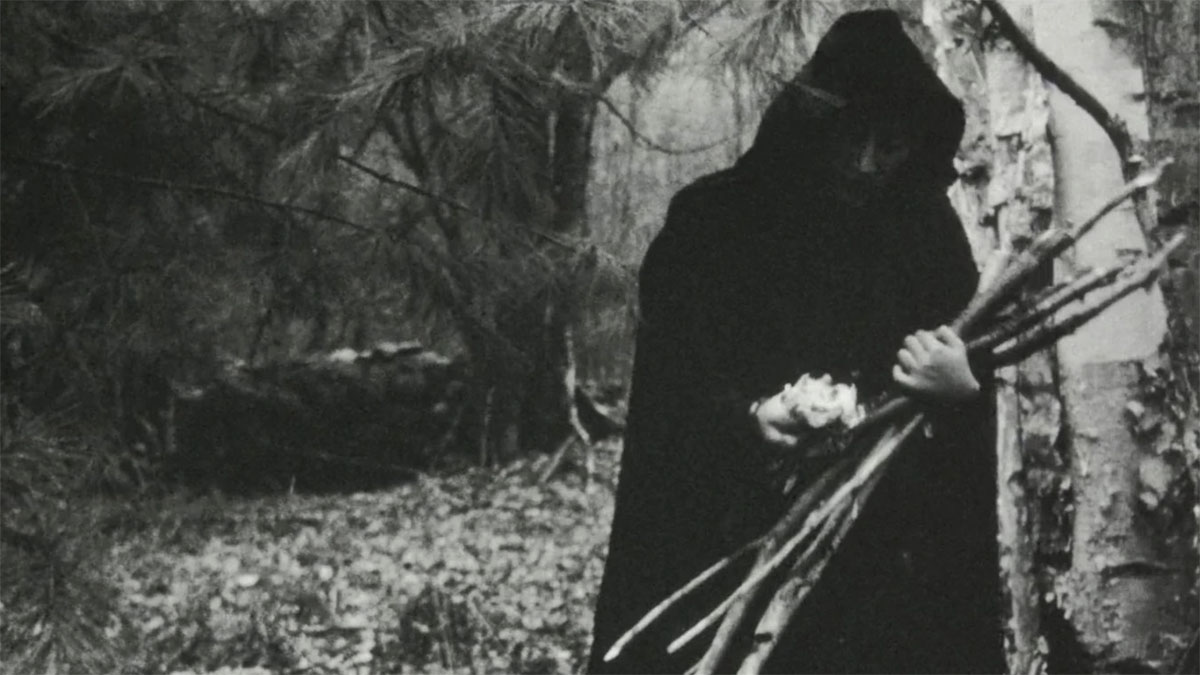
Barbara Hirschfeld’s 1972 nine-minute 16mm film, Transformations, looks like it could have come only from the Vermont woods in which it was made. Utilizing the talents of the local feminist collective, Hirschfeld gives us just cause for the aforesaid bracing, because there’s no other cinematic offering like this one. We watch various women begin their days, in their modern homes—which don’t look that different from any you’d find in this region today—as they set about forgathering in the woods. Lest we doubt what period we’re in, a car whizzes by in the corner of the frame as one of these women walks along the side of the road, but it’s incidental, a remnant, if not revenant, on wheels in its own time in comparison to the centrality of this morning ritual.

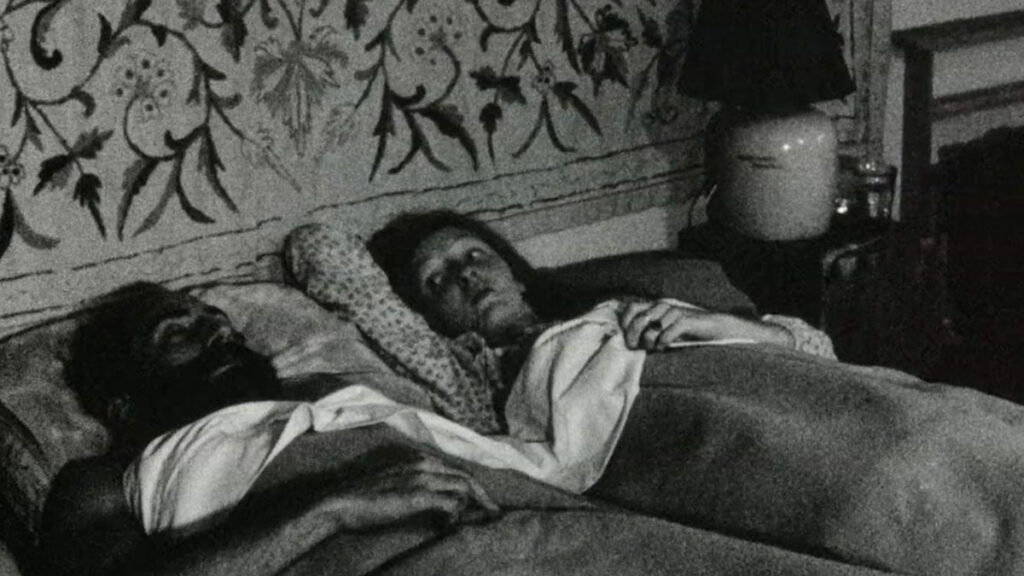
Each woman has tasks and responsibilities that are tended to, but we intuit that these matters of business are also matters of identity pertaining to the larger group to which they all belong as self-actualized individuals. They have their lives of the home and their lives—and selves—apart from it. We see one of these women as she opens her eyes for the first time that day and then side-eyes her still-sleeping husband in the bed next to her.

There’s no bundling board per se, but we wonder what their marriage is like. Are they happy? Did they come together like many do because what else is one going to do? Shortly thereafter, we witness the same woman leaving the bedroom with her husband having awakened. Not a word passes between them. This isn’t his time to infringe upon her time. He understands, though we’re unsure how readily he agrees or how long that took, or what it took. We won’t see any more men here. We don’t need to. That would be like an intrusion upon identity and that which must be maintained. Think of a person who keeps chipping away at their favorite activities to fit their lives and selves to how someone else is. Boundaries are necessary. Perhaps this is but an example and all is conjugal bliss later on, because this routine is respected by both parties.

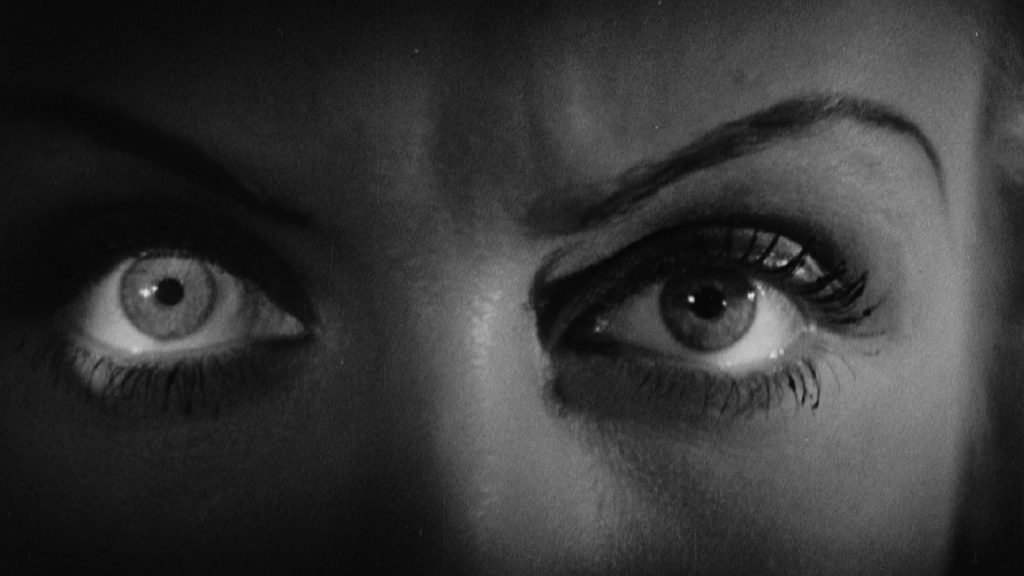
Transformations dazzles like an early experimental work by Jean Cocteau or Carl Theodor Dreyer. We feel like we’re also on our way to these woods, as if the color of our world has been replaced by these high-contrast blacks and whites, and this is only natural. Think about when you were a kid and asked someone you thought of as impossibly older than you, but who was like 35, if the world was in color when they were a child. Often we don’t know what we know until we know it, and then barely at all.

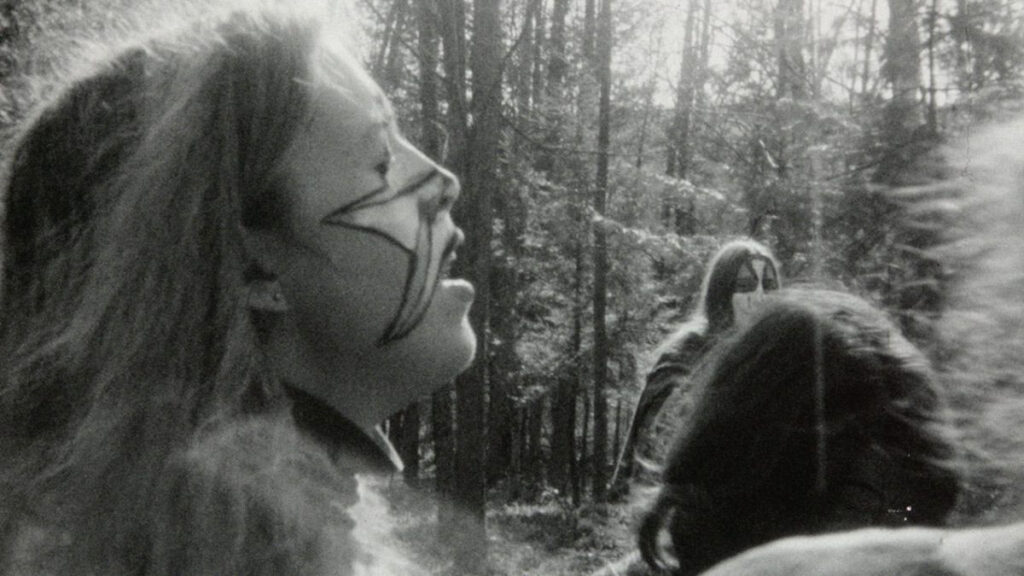
The film’s tension originates from our journey of discovery as viewers. Are we going to see a sacrifice? Will there be bloodletting? The women gather bundles of sticks, collect water from a sluice, paint their faces, play pipes, beat drums, throw the sticks on a fire, gnaw at indeterminate forms of food, dance as children who aren’t children and therefore understand something about innocence and innocence lost. The film stock appears to ripple, as if it’s about to degrade and disappear before our very eyes—a movie that vanishes through the process of watching it.

Julie Haines’s score combines the sounds that might come from the deepest part of the forest with a type of growing emotionalism, the interpolated drum notes suggesting our own quickening heartbeats. We become one with the film as the women each become one with themselves through their group activity and the agency exhibited and celebrated—for this is celebratory horror and proof that horror needn’t be “bad”—in their choosing. And what choice are they making? To cast spells? Imprecate possessive men? Or to simply start the day in their manner, as others might with yoga or some laps in the pool? Who are we to judge? Who are we to even know?

There are instances in which these women may be looking directly at us, beckoning, or challenging our mores and/or views. But then again, they aren’t necessarily looking at us at all, and it only appears that way. Each time we think we’re more certain than the last, only to again be plunged into doubt deeper than before. These are haunting witches, but they could also be witches unconcerned with anyone else right now, focused on their tasks at hand, their community, their personal growth. For all we can tell, they each return home following their witchy ablutions, shower, and head off to work. 🩸

COLIN FLEMING

is the author of eight books, including the story collection, If You [ ]: Fabula, Fantasy, F**kery, Hope, a 33 1/3 volume on Sam Cooke’s Live at the Harlem Square Club, 1963, Meatheads Say the Realest Things: A Satirical (Short) Novel of the Last Bro, and a book about 1951’s Scrooge as the ultimate horror film. His work has appeared in Harper’s, The Atlantic, Rolling Stone, The New York Times, Vanity Fair, The Daily Beast, Cineaste, Film Comment, Sight and Sound, JazzTimes, The New Yorker, The Guardian, and many other venues. He’s completing a book called And the Skin Was Gone: Essays on Works of Horror Art. His website is colinfleminglit.com, where he maintains the Many Moments More journal, which, at 2.7 million words and counting as of autumn 2023, is the longest sustained work of literature in history.

How to see Transformations:

The film is also part of TCM’s out-of-print UPA: The Jolly Frolics Collection.
RELATED CONTENT
    FRESH BLOOD
GUIDE | MODERN SLAYERS
(Avalon Fast, Canada, 2025)

CAMP, the second feature film from Vancouver Island writer/director/producer/editor Avalon Fast, is notably not called “Camp.” I don’t mean any eggheadedness here, but merely that this typographical anomaly is no quirk...

BY FRANK FALISI  |  October 27, 2026

ARTICLE | ESSAY
Walpurgis Night and the spell cast by 1960’s The City of the Dead.

Just about everyone loves Halloween—and if someone tells you they don’t, you might wish to keep your distance—but few people are aware of the spring’s variant on All Hallow’s Eve.

BY COLIN FLEMING  |  April 30, 2024

RECOMMENDED
    RAVENOUS
GUIDE | ORIGINS

Supernatural

(Victor Halperin, USA, 1933)

This pre-Code offering packs a lot of story into its typically brisk running time, with several plot threads weaving together a (not always successful) tapestry of spooky and criminal doings.

READ MORE >

BY  ANN OLSSON  |  Month 00, 2021

REVIEW

The Keep

(Michael Mann, USA, 1983)

In what could be the fastest-resulting rape revenge movie, a drunken lout brutally forces himself on Ida, the young woman who doesn't return his affections, during a party over Labor Day.

READ MORE >

BY  LAURA KERN  |  Month 00, 2021

REVIEW

We Need To Do Something

(Sean King O'Grady, USA, 2021)

Beast is a lot of movies in one package - fractured fairy tale, belated-coming-of-age story, psychological drama, regional horror film - but above all it's a calling card for its leading lady, Jessie Buckley.

READ MORE >

BY  LAURA KERN  |  Month 00, 2021