
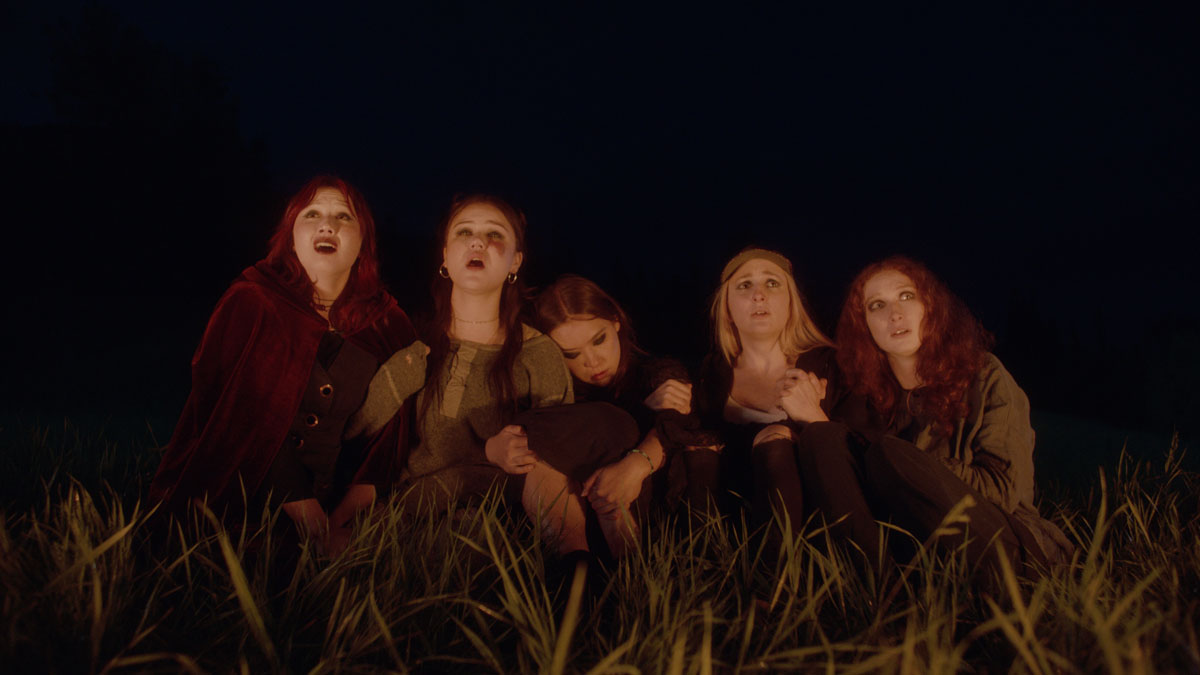

CAMP, the second feature film from Vancouver Island writer/director/producer/editor Avalon Fast, is notably not called “Camp.” I don’t mean any eggheadedness here, but merely that this typographical anomaly is no quirk of incidental design. Rather, it indicates something slippery about the word, and about our relationship to its implications. Hiking boots at bay, we must continuously square the way “camp” conjures swim tests and s’mores in our cultural imagination with the role it plays in the lexicons of genocide and ethnic cleansing. “Camp” held Indigenous Americans ripped from their Eastern homes before they were violently relocated nearly a thousand miles away, and “camp” locked up Americans of Japanese descent suspected of treason during WWII. “Camp” keeps eager participants and prisoners alike. It is, after all, a sensibility, “as distinct from an idea . . . one of the hardest things to talk about.”
I don’t invoke Susan Sontag’s ravenously cited, usually misappropriated work “Notes on ‘Camp’” out of ironic pedantry—whatever else it is, Fast’s film is not ironic; its personal stakes are too high. And I don’t wish to belabor fonts at the expense of the actual images that are, despite (or maybe because of) their micro-budget origins, evocative in a way usually reserved for how we remember films watched in childhood. I want to leave open a myriad of possibilities, both to Fast and to a film that is at once figuratively mercurial and forcibly, joyfully witchy.
All horror in CAMP emerges from the ways young women are invited to center trauma over pleasure. The former mode is much maligned in contemporary genre films, and it is to Fast’s enormous credit that CAMP authors a perspective on the worshipful emptiness we accord personal trauma precisely by charting a path forward from it, to a multiplicity of pleasures. During the movie’s opening teen-party scene, Emily (Zola Grimmer) confesses in a game of Truth or Dare that the worst thing she ever did wasn’t cheat on a boy or sneak out after midnight but accidentally hit a child with her car. When the chorus of weedy partygoers react in haranguing judgment, Emily flees the scene with a few pilfered bags of coke and her best friend, Charlie (Giselle Morison), who promptly overdoses in the car as they drive off into the night. As if beamed in from an after-school special, Emily’s father gently nudges her toward a job as a counselor at a camp for troubled kids. Wouldn’t she be perfect for it?
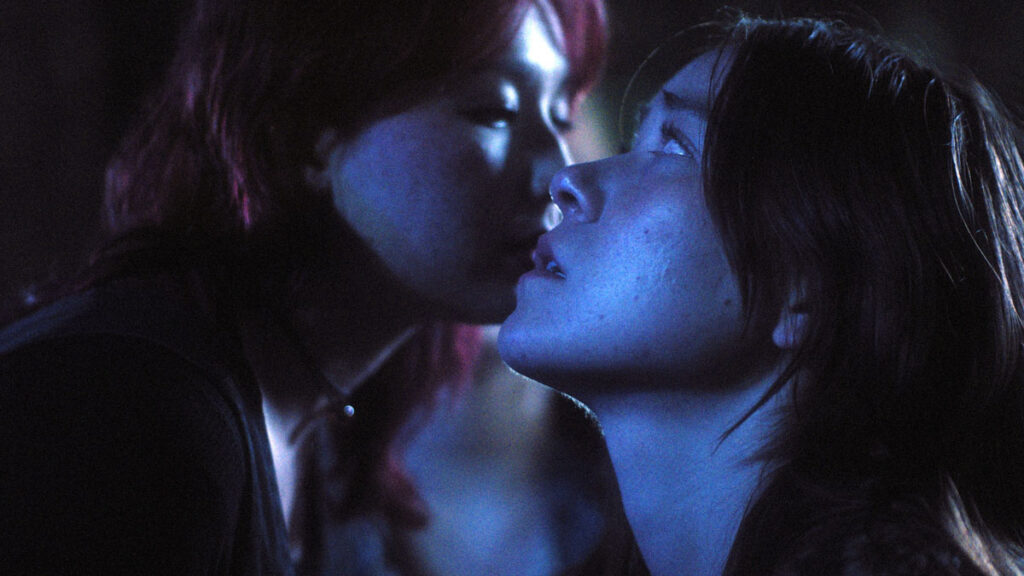
That something is off at this wilderness retreat is increasingly clear to Emily. The veritable coven of experienced girls—led by Alice Wordsworth’s assured Clara—welcome Emily into their midst immediately. They share their secret lusts in the hideaway attic where they light candles and incant. Campers arrive and boys abide, but Emily’s new friends are so steady that any workplace obligations or masculine energies feel nudged out of frame. There is also something off about CAMP’s camp, but it is decidedly benign, expressed using shoegaze cinematography that destabilizes narrative reality as the film moves. Fast builds woozy animations and twinkling textures into the pastoral backdrop, and as the action blurs and buzzes to its conclusion, any sense that the film will provide specific context for its metaphoric happenings fades, blessedly. What happens? In the woods, the girls come together. What does their coming stand for? How dreary it would have been to leverage a movie this close to dreams as polemic against that implied but unspoken menace: the conversion camp. Fast and crew do nothing of the sort, while still confidently opposing the paradigm that such a camp operates on. To paraphrase Sontag again, the essence of CAMP is its love of the unnatural, and of artifice and exaggeration. 
 FRESH BLOOD


 RAVENOUS

 JustWatch