

If you’re not a Molly, then you’ve met a Molly, someone so thumped by reality that their every word is a new knot in the bedsheets tied end to end and lowered out of reality’s window. Our Molly (Millie Perkins), the hero of Matt Cimber’s The Witch Who Came from the Sea (1976), specializes in sailor’s knots: she tries to escape her past by telling herself and anyone who will listen that her father was a ship captain lost at sea, rather than face the fact that he was a rapist who preyed upon his own child. The story convinces us that imagination is the only way out of an absurd world full of casual horrors, while denying us any of the pleasure that fantasy tries to provide.
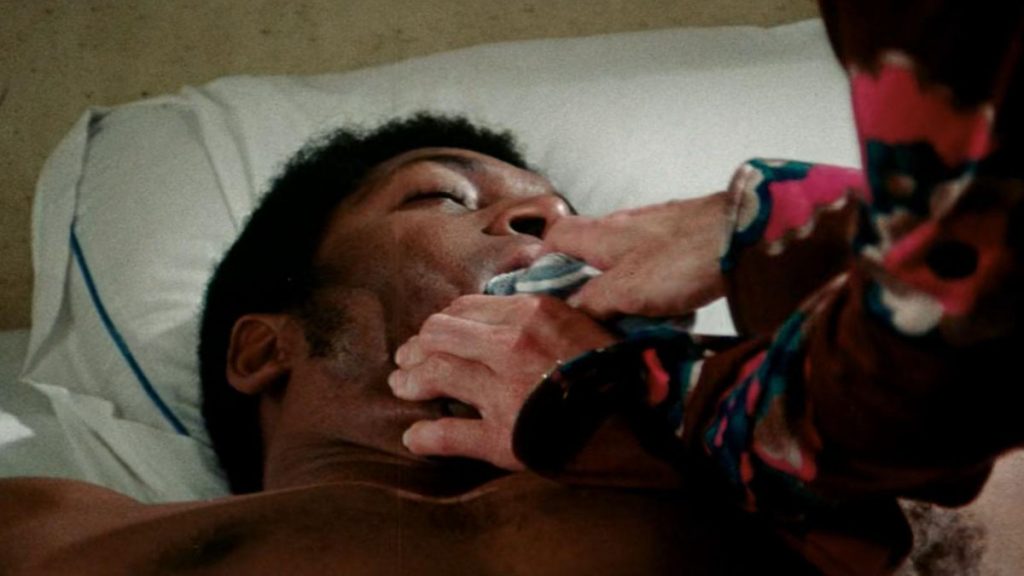
Perkins keeps the film afloat with her believably deranged performance as Molly, a bar waitress whose essential innocence ebbs at night before a blood-red tide of murder and castration. If I strain the sea metaphor, that’s nothing compared to the watery references crammed into the script by Robert Thom, whose sharp, nuanced dialogue captures Molly’s bizarre contradictions. We can never be sure how aware she is of the part of her that hunts down the famous men she sees on TV in order to kill them. She lives in a constant state of wonderment and confused self-absorption, often hearing one word while repeating another, mixing up “crabs” with “ants,” “chauffeur” with “pilot.” One moment she’s flirting with TV actor Billy Batt (Rick Jason) at the bar, the next she is launching herself at his person while uttering what must be one of cinema’s great lines: “I’m going to break the bones, then suck the marrow!” Thom wrote this script while lying sick in a hospital bed, looking for a means to pay his medical bills, and it certainly feels like a desperate fever dream.
Cimber fills out the feverish atmosphere with slow, woozy scenes that culminate in savage violence. Voices are pitch shifted down and made to echo, capturing Molly’s altered states—drunk, stoned, and insane—just before she strikes one of the sleazy men in her orbit. Cimber shifts, too, the tone of the story, so that Molly’s dreamspeak clashes with the mundane conversations and vulgar comedy superbly carried out by character actors like Lonny Chapman, Peggy Feury, and a young George “Buck” Flower (surprisingly restrained here). There is also an intriguing mismatch between the swinging ephemera of the ’70s and the timelessness of the ocean beach, scored by bleak art-house flute and trumpet, its loneliness horizontally affirmed through the use of anamorphic camera lenses in part courtesy of legend-in-the-making Dean Cundey, a couple years before the cinematographer went on to shoot Halloween (1978). And if that weren’t enough, it is also a film about the perils of television.
These days, a single shaving commercial doesn’t feel as psychologically undoing as, say, an endless reel of videos designed to hijack your dopamine, but television is the original brain invader, and Molly loves television. Loves it and wants it to die. Everything is better there, she tells us, as she proceeds to murder the men who dominate it. If she is Venus, the witch daughter of a sea that has been “knocked up” by a god, as Billy Batt puts it, then it makes sense that the only way back to mother sea is via the elimination of the sperm donors who befouled its waters in the first place. So she pursues an unconscious revenge, until what she idolizes and what she loathes amount to the same thing.
Though the film follows an eccentric path to get there, its emotive ending lands with a quiet but decisive jolt. Molly runs out of fantasy, and reality fills the void. A glistering riot of images—shot on color negative to overlap the blue sea—ports us instantly, dreadfully into Molly’s brain. It is one final, tragic glimpse of a shipwreck being swept out to sea. 
 FRESH BLOOD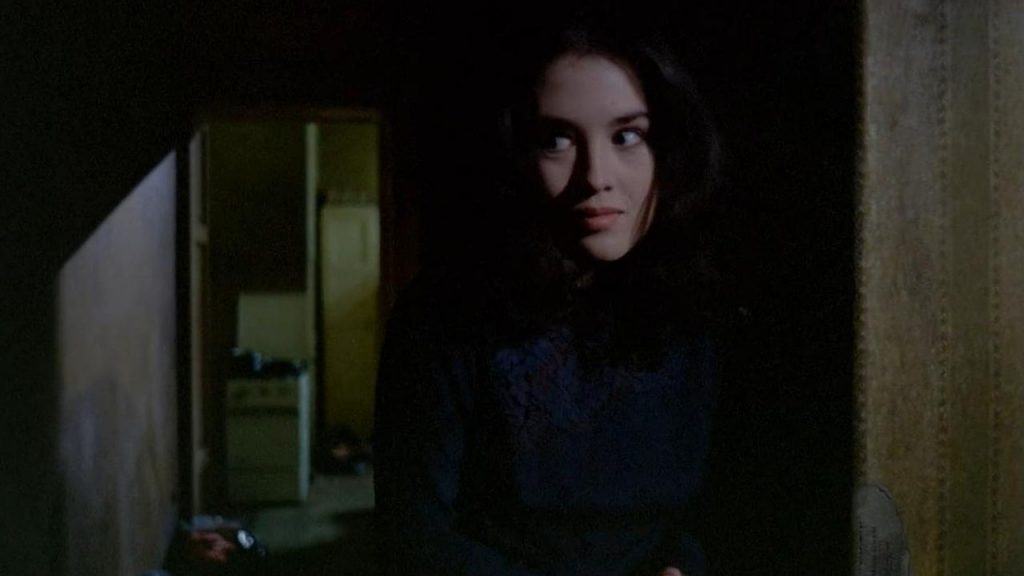

 RAVENOUS


 JustWatch