GUIDE | CORE HORROR

Beware, My Lovely

(Harry Horner, USA, 1952)

BY COLIN FLEMING | December 22, 2025
SHARE:

Christmas in the company of people we call friends and/or those with whom we share a last name can often feel like Christmas in isolation or alongside strangers. We keep so much about our true selves to ourselves as our communication skills collectively devolve that growing apart becomes likelier, regardless of our desires or what’s best for us. A day meant to be a celebration instead turns into a day to be gotten through before we’re alone again, which may also be like spending time with a stranger. Isn’t that why people ask Santa for wine and sleeping pills? No? Must have gotten that wrong.

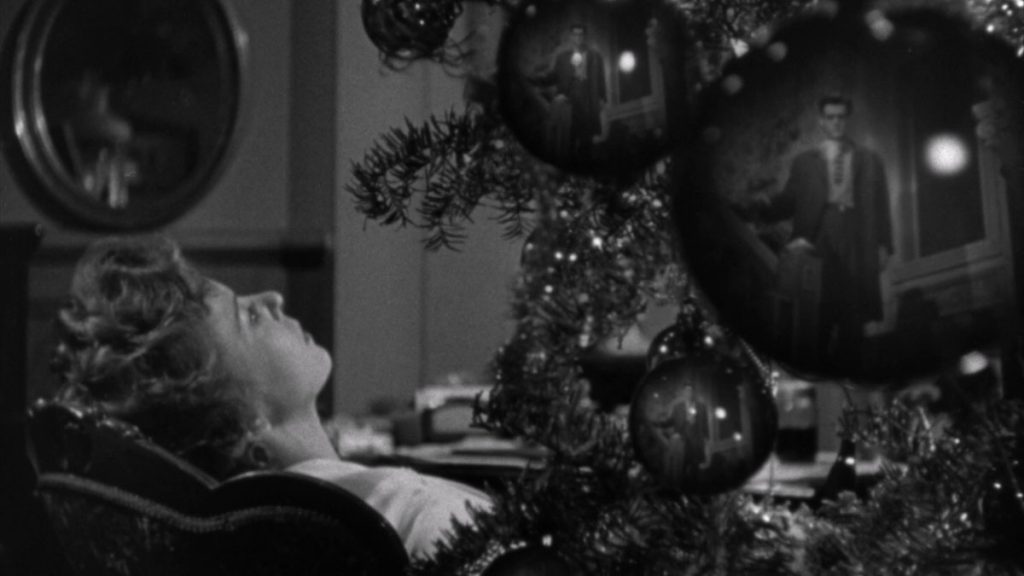
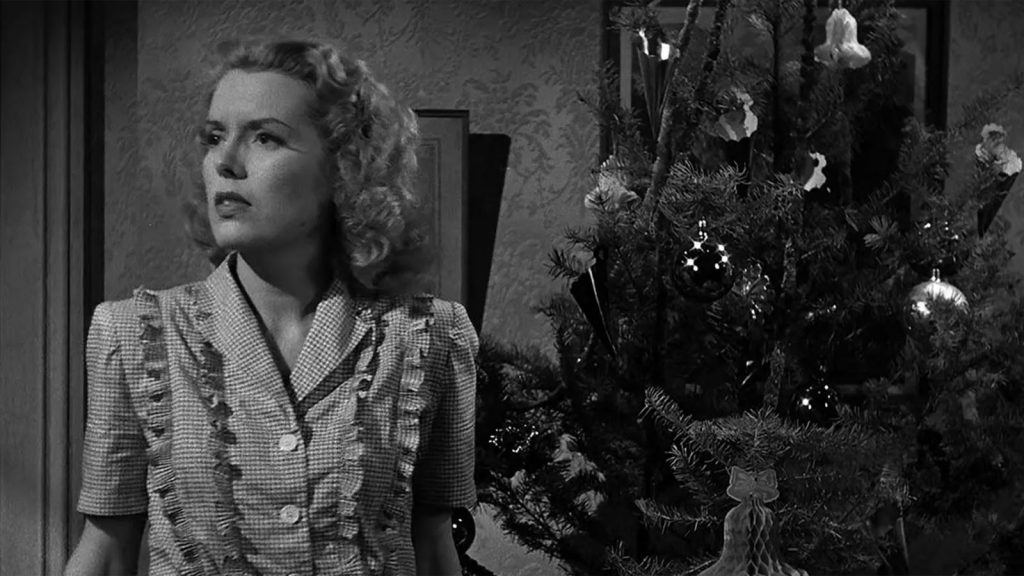
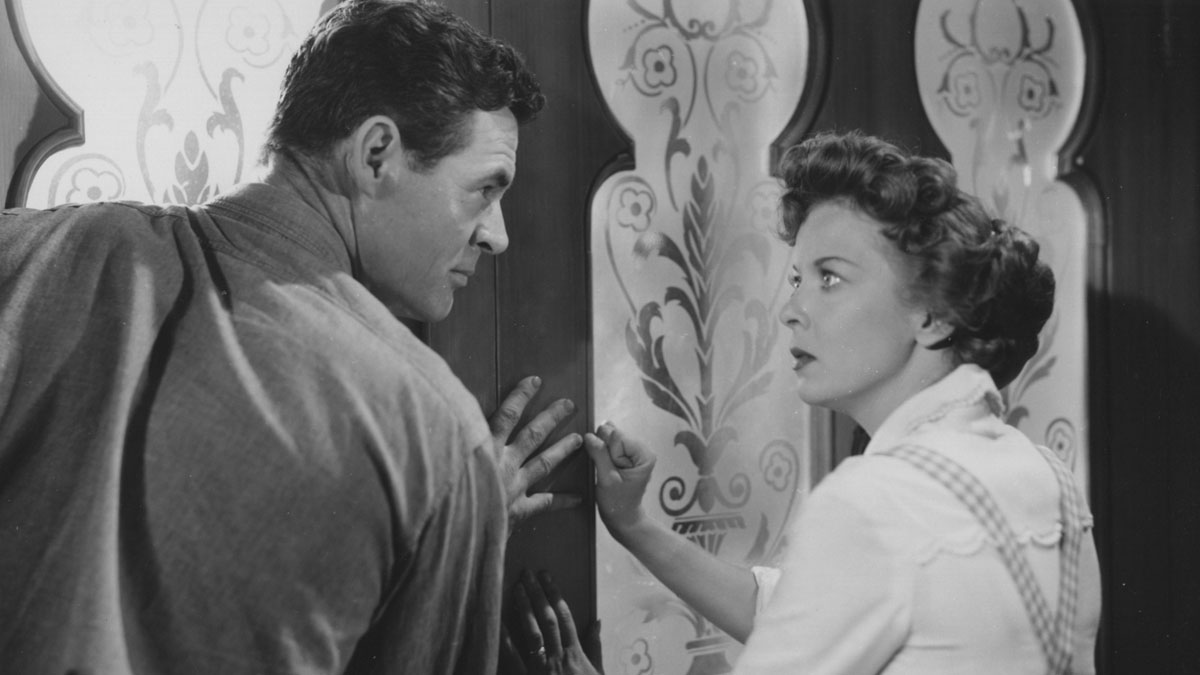
In Harry Horner’s 1952 Christmastime thriller, Beware, My Lovely, Helen Gordon (Ida Lupino) is a war widow wishing to do a stranger a kind turn by giving him much-needed employment cleaning her house while her boarder is away on his seasonal travels. In other words, she’s alone. Robert Ryan plays Howard Wilton, he of the new gig, which, like all his jobs, isn’t one that’s going to last. Helen wants to make Christmas as painless as possible. She has her tree as well as her commitment to keeping up appearances. There’s a void in this woman’s life, and our sense is that this portion of the year is something she tries to endure and put behind her. She’s generous to her niece and the neighborhood children—a person trying to share small, but notable, parcels of joy, but whose sorrow is constant.

When we first meet Howard, he’s in another city as his previous cleaning job wraps up in a most unceremonious fashion. He legs it to the rail yard—shades of the ill-fated cutting in Charles Dickens’s “The Signal-Man”—and it’s on to what feels like the latest in a long string of locales for this man without a home. We know something is off with Howard, and that he’s dangerous, but at no point do we think he’s wicked or sadistic. His problem is one of mental illness. He does what he does without the knowledge—or the recollection—of what he’s done. If anything, he’s lamblike.

Helen realizes that Howard isn’t quite right, and she tries to help him. They share several real moments of connection, and you think they’re the first of their kind in a long time for each person. Ryan is among the most believable of actors. You never doubt him as his characters. Lupino isn’t far behind; it’s no wonder she was also a successful director. Beware, My Lovely is itself suggestive of a sedentary exploration—albeit by another director—of some of the ideas that would later be brought to bear by Lupino in the ambulatory The Hitch-Hiker (1953). That film, though, featured a villain of hideous, focused intent, whereas both leads in Beware, My Lovely are victims.

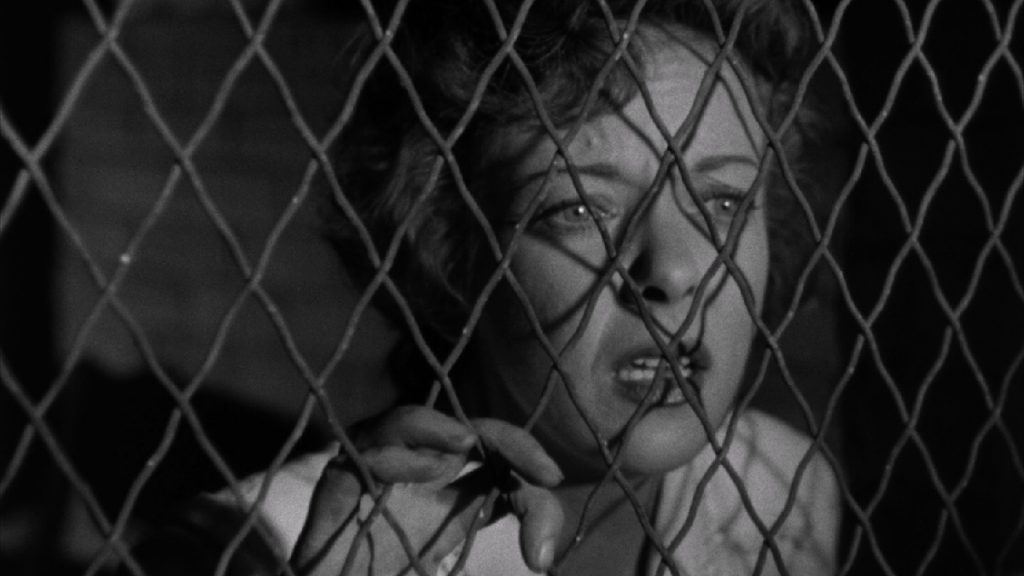
Not that Helen would immediately share this belief after Howard imprisons her in her own home, with murder very much a possibility; after all, we’ve seen that before from Howard. Sort of. But presumably. Howard is by turns terrifying, to the viewer—and Helen—having no idea what he’s capable of, and then meek as can be, as vulnerable as a baby in its crib, or a manger, if you prefer.

The phone rings, and people come to the door. Life goes on just as life seems to stop, literally and figuratively, for Helen, the same as it feels like it has never started for Howard—a potent reminder that just because you see someone at Christmas, or hear their voice over the phone, and they look and sound as you expect them to, doesn’t mean they aren’t in real pain. A pain that they may think they can’t share.

The film’s ending is open. It’s a deathless picture—once the main action gets going, anyway—and a bloodless one, but real emotional guts are spilled. Historians try to shoehorn Beware, My Lovely into the noir category, but it’s a daylight film. There’s precious little night. It’s mostly a bad morning and early afternoon. We want these people to be okay and also to get the hell away from each other. The Christmas wish is granted, but it’s akin to that third wish in the old monkey’s paw trope—with things going back to what they were, which, of course, isn’t the same as what they had been. A hard truth and an all-too-common trick of the Christmas light. 🩸

COLIN FLEMING

is the author of eight books, including the story collection, If You [ ]: Fabula, Fantasy, F**kery, Hope, a 33 1/3 volume on Sam Cooke’s Live at the Harlem Square Club, 1963, Meatheads Say the Realest Things: A Satirical (Short) Novel of the Last Bro, and a book about 1951’s Scrooge as the ultimate horror film. His work has appeared in Harper’s, The Atlantic, Rolling Stone, The New York Times, Vanity Fair, The Daily Beast, Cineaste, Film Comment, Sight and Sound, JazzTimes, The New Yorker, The Guardian, and many other venues. He’s completing a book called And the Skin Was Gone: Essays on Works of Horror Art. His website is colinfleminglit.com, where he maintains the Many Moments More journal, which, at 2.7 million words and counting as of autumn 2023, is the longest sustained work of literature in history.

How to see Beware, My Lovely:

The film is on Blu-ray as part of Kino Lorber’s box set Film Noir: The Dark Side of Cinema XIX.
RELATED CONTENT
    FRESH BLOOD
GUIDE | ORIGINS
(John Brahm, USA, 1944)

Marie Belloc Lowndes’s 1913 novel The Lodger—an expansion of her short story of the same name—has been an enticing proposition for filmmakers, and well it should, given its delectable “what-if” premise: Jack the Ripper...

BY COLIN FLEMING  |  June 3, 2025

ARTICLE | ESSAY
A break from traditional Christmas fare with 1945’s Strange Confession, and the coming together of assorted heads.

Were you to remark that the 1940s represented a peak in American pop-cultural horror, most people would automatically think you were talking about movies.

BY COLIN FLEMING  |  December 22, 2023

(Alfred Hitchcock, USA, 1946)

Uniting his powers of visual storytelling and his understanding of human foibles, Hitchcock served up a top-notch melodrama and spy thriller with Notorious. After making short films on behalf of the British war effort and helping to...

BY ANN OLSSON  |  June 13, 2022

RECOMMENDED
    RAVENOUS
GUIDE | ORIGINS

Supernatural

(Victor Halperin, USA, 1933)

This pre-Code offering packs a lot of story into its typically brisk running time, with several plot threads weaving together a (not always successful) tapestry of spooky and criminal doings.

READ MORE >

BY  ANN OLSSON  |  Month 00, 2021

REVIEW

The Keep

(Michael Mann, USA, 1983)

In what could be the fastest-resulting rape revenge movie, a drunken lout brutally forces himself on Ida, the young woman who doesn't return his affections, during a party over Labor Day.

READ MORE >

BY  LAURA KERN  |  Month 00, 2021

REVIEW

We Need To Do Something

(Sean King O'Grady, USA, 2021)

Beast is a lot of movies in one package - fractured fairy tale, belated-coming-of-age story, psychological drama, regional horror film - but above all it's a calling card for its leading lady, Jessie Buckley.

READ MORE >

BY  LAURA KERN  |  Month 00, 2021

🖨 📄