
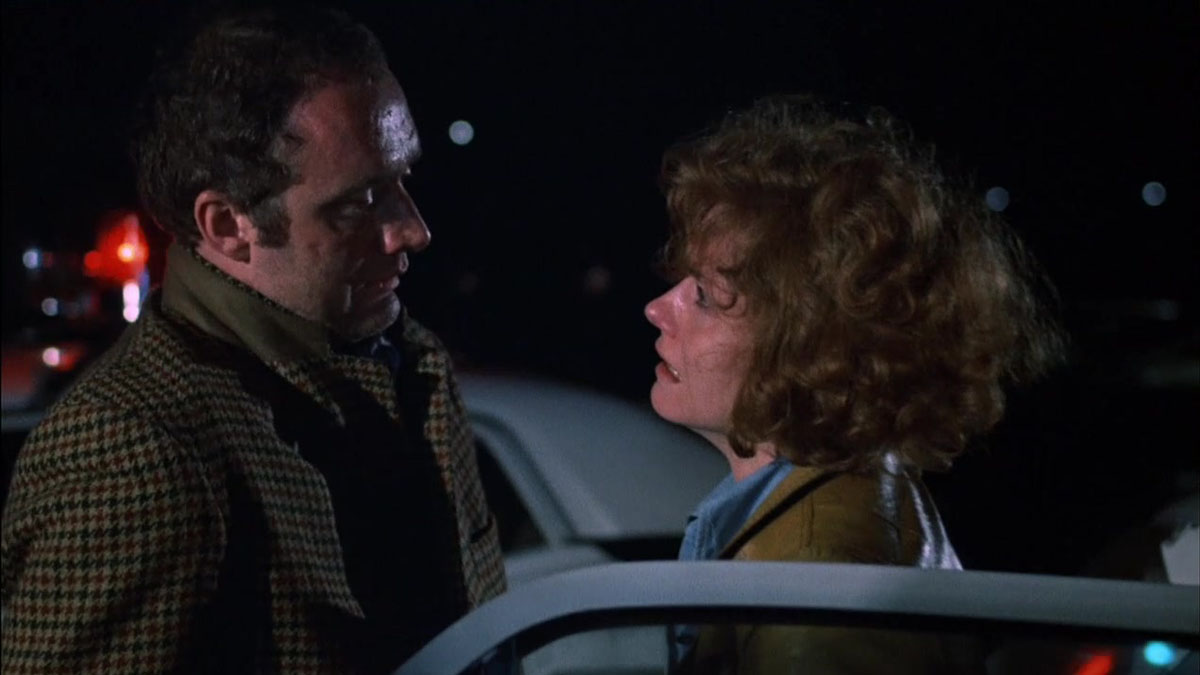

The opening-credits sequence of Larry Cohen’s infant creature feature It’s Alive is minimal but disturbing—dozens of illuminated blobs populate the screen like something extraterrestrial, bobbing around like a horde of insects. Bernard Herrmann’s lush score swells ominously, reminiscent of his earlier orchestral work but punctuated with haunting electronic flourishes. Soon, it becomes apparent that a crowd of flashlights was the source of activity, and we are the subject being sought out and scrutinized. It’s a fitting start to a film that centers on a manhunt (of sorts), with police swarming around every corner. The focus of the search is just a baby, horrifically disfigured and hungry for blood, with the child’s own father, Frank (John P. Ryan), leading the charge against him. The plot is fairly cut-and-dried, but the principal performances by Ryan and Sharon Farrell, who plays his wife, Lenore, are so emphatic that they complicate our sympathies as audience members, leading us to question whether this creature deserves to die. Thanks in large part to the talents of its director, It’s Alive is a horror film with unexpected depth and a surprising dose of sentimentality.
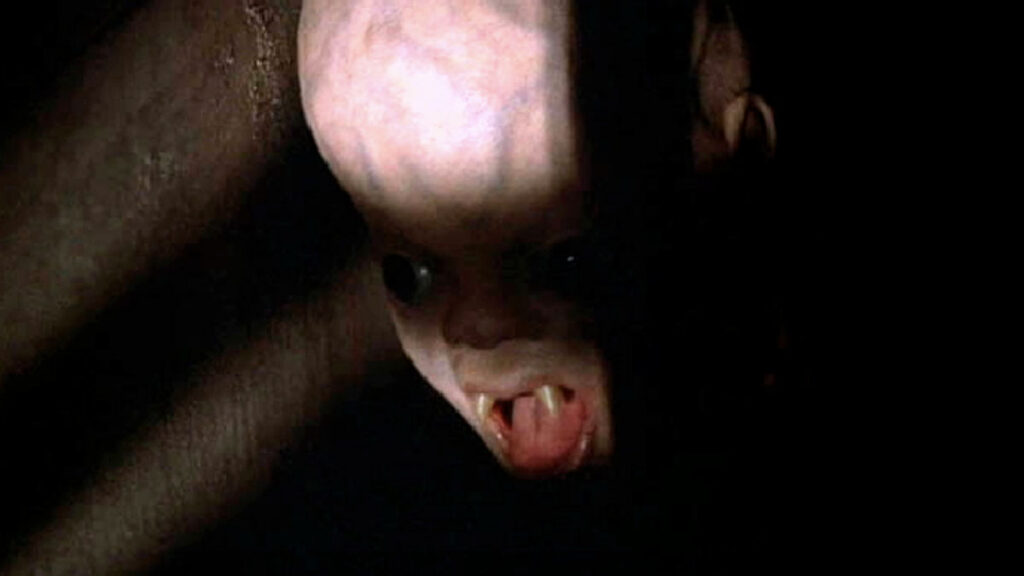
Following Bone (1972), Black Caesar (1973), and Hell Up in Harlem (1973), It’s Alive was Cohen’s fourth feature, and his first of many in the horror genre. With special-effects wizard Rick Baker on board (soon after The Exorcist), the two fashioned a mutated baby puppet that was simple but effective, with gnashing fangs and a perpetually enraged stare. We hardly see the child throughout the film, but Cohen makes its presence eerily known through images of shaking toys, stolen milk, and other signifiers of a wild baby on the loose. The local police (led by the wry character actor James Dixon) work themselves into a frenzy, at one point hilariously drawing their weapons on a perfectly healthy toddler. Meanwhile, the deformed child’s mother begins to lose her sanity, wandering the house bug-eyed and slack-jawed, while her husband seethes with anger and frustration.
Farrell’s portrayal of the mad housewife is a wonder to behold, but Ryan’s character arc from discouraged ire to sensitive poppa is a tour de force of acting. Finally confronted with his crying child during the film’s last act, Frank suddenly physically unravels, breaking down and sobbing hysterically in an underground tunnel. He is unable to save his unfortunate son from uncertain death, but not without engaging in a delightfully violent grand finale. The film ends with news transmitted over the police radio: another mutant baby was born in San Francisco, setting up the sequels to come.
It’s Alive was given a very modest initial release, but three years later, following a change in management at Warner Bros., Cohen convinced the higher-ups to re-release the film, now with a significant promotional push, touting the catchy tagline: “There’s only one thing wrong with the Davis baby. It’s alive.” This time, the film was a resounding success, officially securing its two sequels: It Lives Again (1978) and It’s Alive III: Island of the Alive (1987). Yet nothing compares to the spare charm of the series’ first entry, with its unhinged performances and creepy, low-budget scares. Cohen went on to direct many horror standouts, from God Told Me To (1976) and Q: The Winged Serpent (1982) up through his final production, Pick Me Up for the Masters of Horror series in 2006, but among his impressive output spanning 30-plus years It’s Alive remains one of his most memorable films, bold and inventive, like a cocky firstborn. 
 FRESH BLOOD


 RAVENOUS
 JustWatch