

Starting with House of Usher (1960), Roger Corman found in Edgar Allan Poe a startling font of inspiration. Over the course of the next four years, he directed and produced eight (!) feature-length adaptations of the writer’s work. (Though in a canny bit of cross-pollinating branding, the sixth of these films, 1963’s The Haunted Palace, is based on a story by Lovecraft while sporting a title lifted from Poe’s 1839 poem.) To be sure, the work of Poe had the hallmarks of a Corman fit: built-in name recognition and public-domain status, and the continuance of the Corman-Poe cycle was no doubt the result of each entry turning a tidy profit. But the mutual ground these distinctly American artists occupied derives, chiefly, from their shared belief that the low could occasionally approach ascension. Mostly, they were debased for their debasing: of Poe, Yeats simply surmised, “vulgar,” though it’s difficult to tell if this judgment was of the man or his poetry. Of “The Raven,” Emerson wrote, “I saw nothing in it,” and Aldous Huxley merely contended that Poe’s work “falls into vulgarity.”
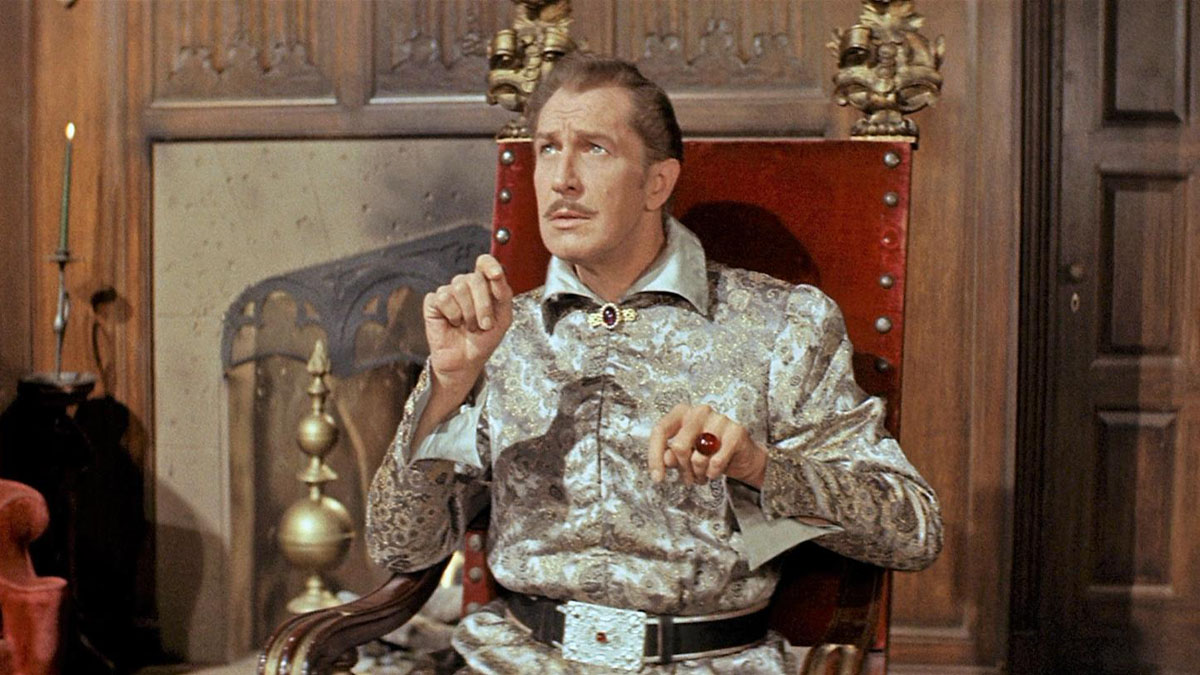
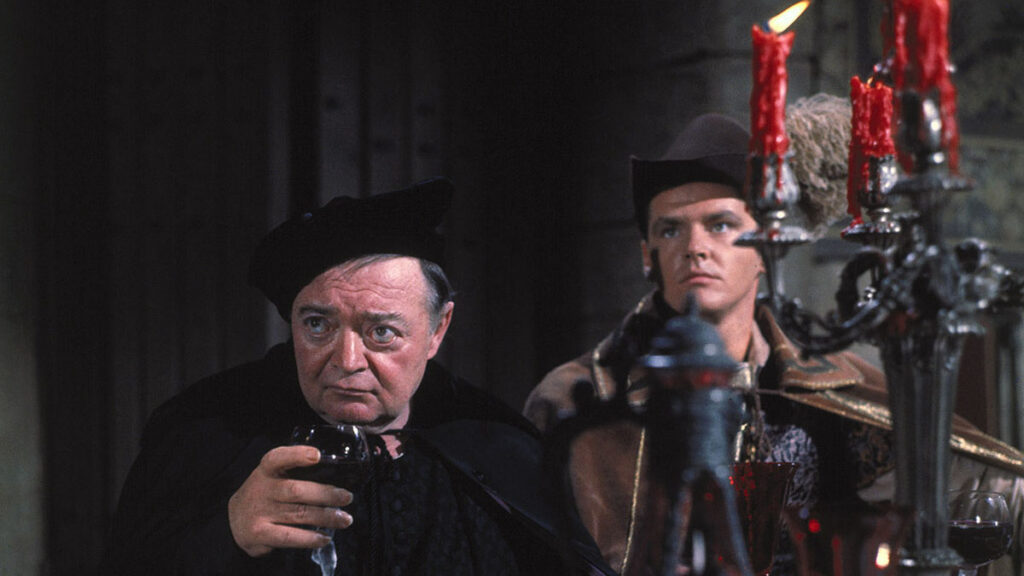
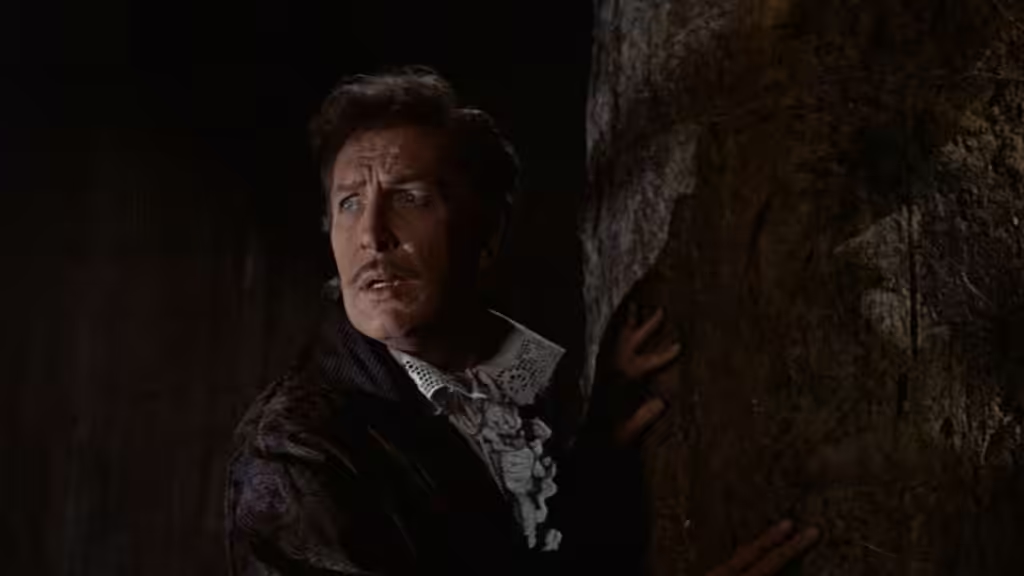
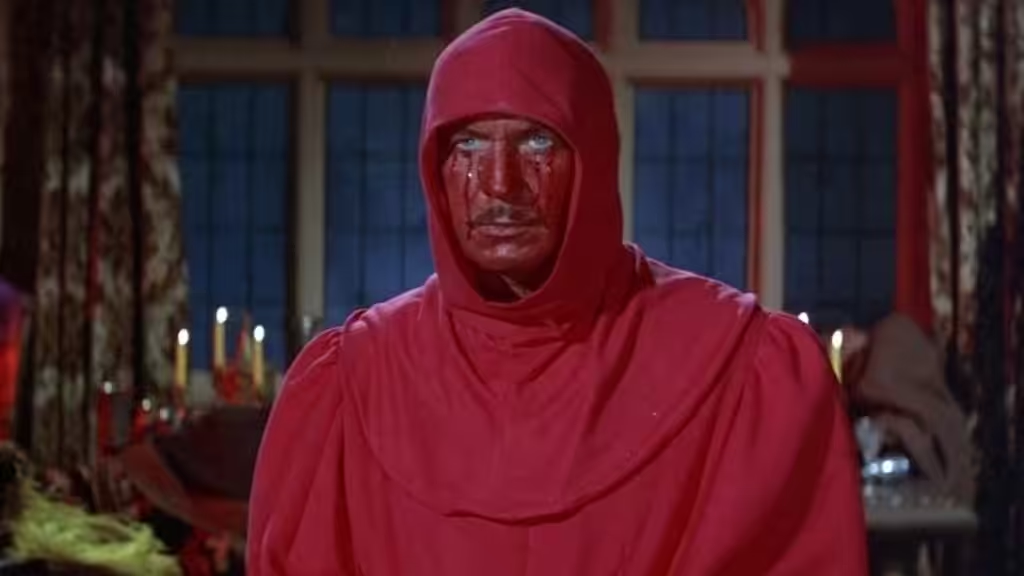
Such criticisms align cheerily with those accorded The Raven, Corman’s fifth Poe work, and the fourth in the cycle scripted by speculative fiction writer Richard Matheson. Seizing as his inciting incident the opening lines of Poe’s poem, The Raven subjects renowned sorcerer Dr. Erasmus Craven (Vincent Price) and his daughter, Estelle (Olive Sturgess), to a midnight visitation from a gabbling raven (Peter Lorre), who insists he is himself a sorcerer, the wizard Dr. Adolphus Bedlo, transfigured into a bird by the sinister Dr. Scarabus (Boris Karloff) in a bit of wizard’s duel cunning. A woman named Lenore (Hazel Court) features (obviously), as does Jack Nicholson (less obviously), who perhaps has a character name but is chiefly playing Jack Nicholson, albeit in tights. Shot in 15 days, the film is a whirlwind of quips and reads, many improvised by Lorre, who clearly relished getting on the stentorian Karloff’s nerves, a chemistry that transfers over to their characters’. Corman shoots everything wide—what good is a repurposed castle set if you can’t see all its balsa wood and foam board?—and keeps his trio of Hollywood Forever men dunking on our sense of good literary taste. Crucially, the tone never spills into the parodic, less a horror-comedy than a remixing of Poe’s “flirt and flutter.” Does the film end with another dramatic wizard’s duel, this time between Craven and Scarabus, each pointing indexes and splaying fingers as lasers jump from them? Blessedly: evermore.
Our collective love sometimes renders Corman Janus-like with Cassavetes: outside the system, for sure, but a force that exalted punk’s DIY ethos over its uncompromising artistic verve. With Corman’s bona fides as a visual stylist perpetually under scrutiny, the pervading pop wisdom read him as a producer of pleasurable schlock, patrician of an unofficial film school that birthed a brood of auteurs thrice as elegant with a camera as he was. The images, as usual, prove telling, and in Corman’s canny modulations from the high Gothic psychedelia of House of Usher to a chummy warmth not far removed from Kaufman and Hart in The Raven, the King of the Bs rendered up something poetic in his relentless frugality. Has any genre filmmaker ever done more with white space, or more adeptly found a way to spin cost-cutting into on-screen enjambment? “A picture for the kiddies and the bird-brained,” quoth Bosley Crowther, in what he assuredly meant as a takedown. Frankly—counting myself as a former member of one group and current denizen of the other—I celebrate the spirit. 
 FRESH BLOOD
 RAVENOUS

 JustWatch