GUIDE | ORIGINS

The Wolf Man

(George Waggner, USA, 1941)

BY COLIN FLEMING | October 26, 2026
SHARE:

It’s human nature to think that what we call monsters—including the horror-movie variety—are monstrous because they choose to be so. Evil is a decision that they’ve made. Instead of being kind, they have preferred to rip open some chest cavities. A criminal decides to plan a robbery, and the monster pencils in Friday on his calendar as the night to hide in the bushes of the scary path leading back to the neighborhood and enjoy a session of killing.

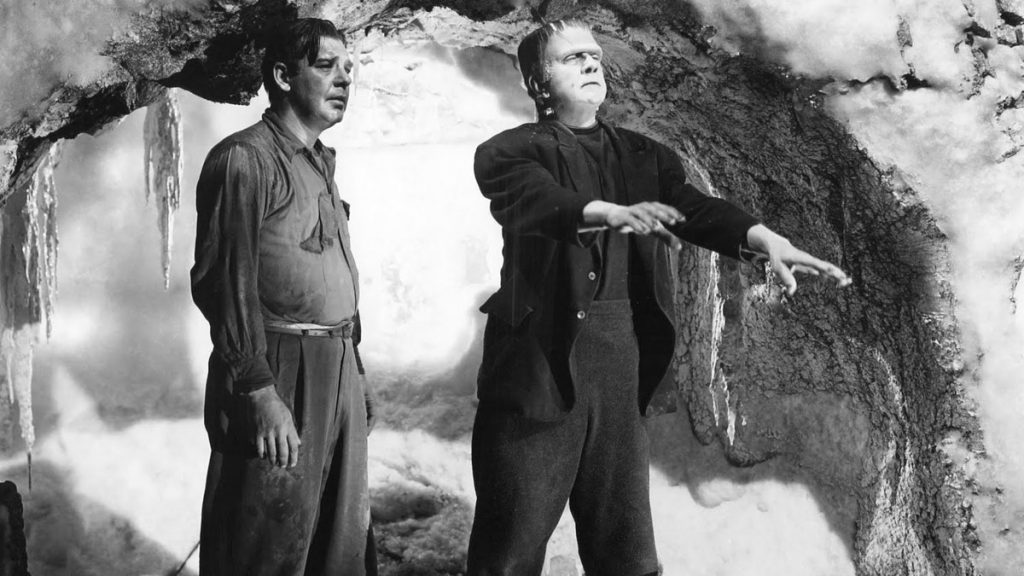
But if we return to something as indelibly monster-centric as the core Universal horrors, we find that monsters don’t do as much choosing as we reflexively believe or presume when first looking back upon them. Dracula does seem to enjoy converting innocent, young London women into blood-drinking deathless brides whose souls will never know peace, but it’s also not as if vegetarianism was on the (sacrificial) table as an option. The Frankenstein Monster is a lumbering vessel of relatability. If we don’t feel for him, we may wish to check if we are ourselves a monster. Ardath Bey from The Mummy isn’t the greatest of guys, but who hasn’t done some questionable things for love?

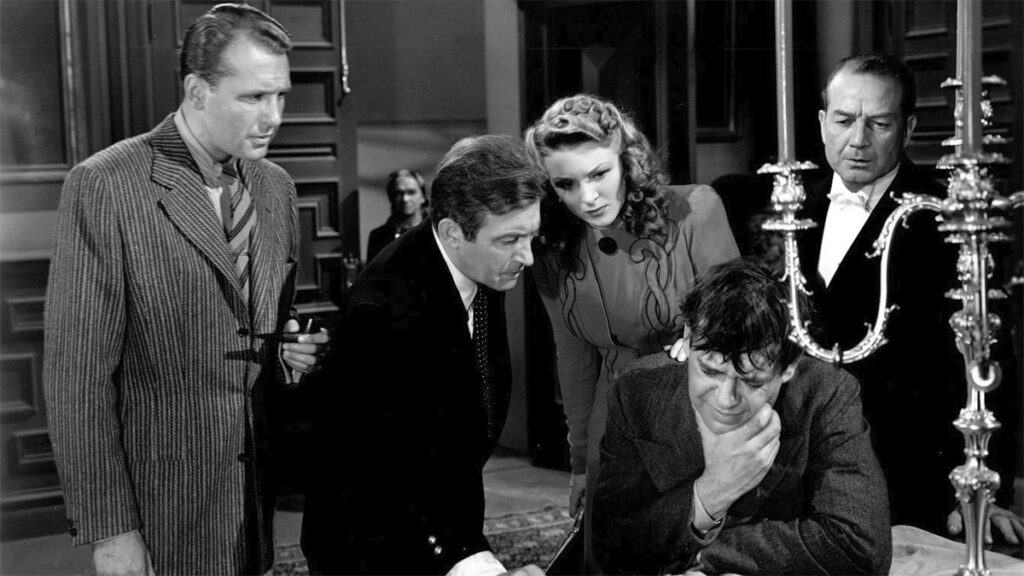
And yet, no one feels quite as blameless as Lon Chaney Jr.’s Larry Talbot from 1941’s The Wolf Man. The first Karloff Frankenstein film is a cautionary tale, but The Wolf Man is a tragedy, the first and best horror film in this sundered vein. You’d think with all the untimely deaths that the tragic would be more in evidence with horror, but it’s always been something of a surprising rarity, just as The Wolf Man makes for a surprising film. Larry returns to home and hearth and his father, Sir John Talbot (Claude Rains), following the mysterious demise of his brother. The men were estranged, but we see immediately how fond they are of each other. Both are exceedingly likable. The sort of people you wouldn’t mind chatting with if they were in the seat beside you.

Larry is a flirt, which is a funny role for Chaney, whom we usually regard as a big lug rather than a fellow who doesn’t go home alone unless he wishes to. Larry kindles a romance with a most pulchritudinous antiques dealer, Gwen Conliffe (Evelyn Ankers), that begins with some peeping involving a telescope—different times, when violating someone’s privacy was a nice way to land a date—and all is going quite well until a night out in the foggy forest at the Romani fair, where Larry is bitten by a werewolf, who happens to be Bela Lugosi, and his happy days come to a violent end, with said ending lasting for a long, long time, given its cursed nature.

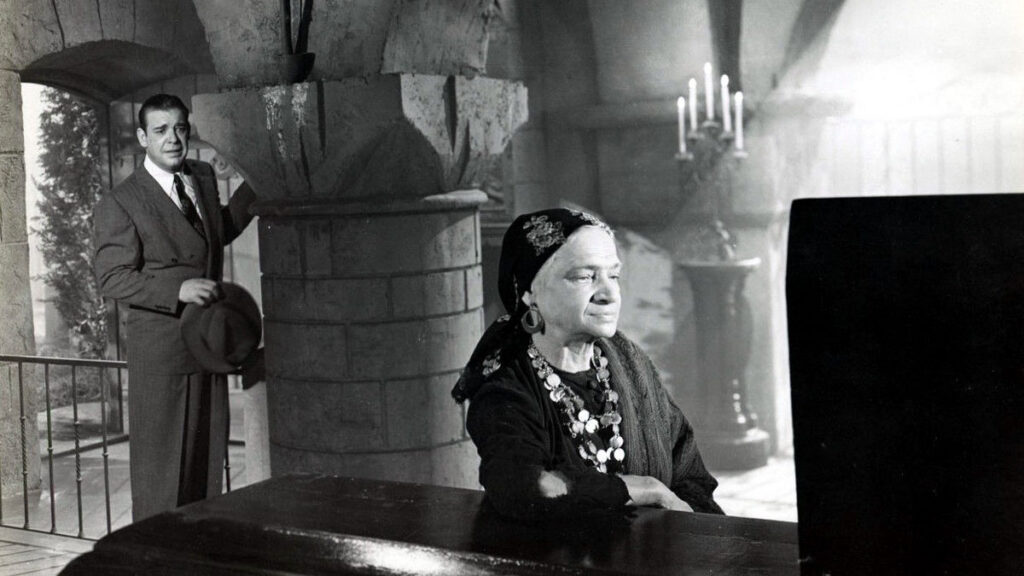
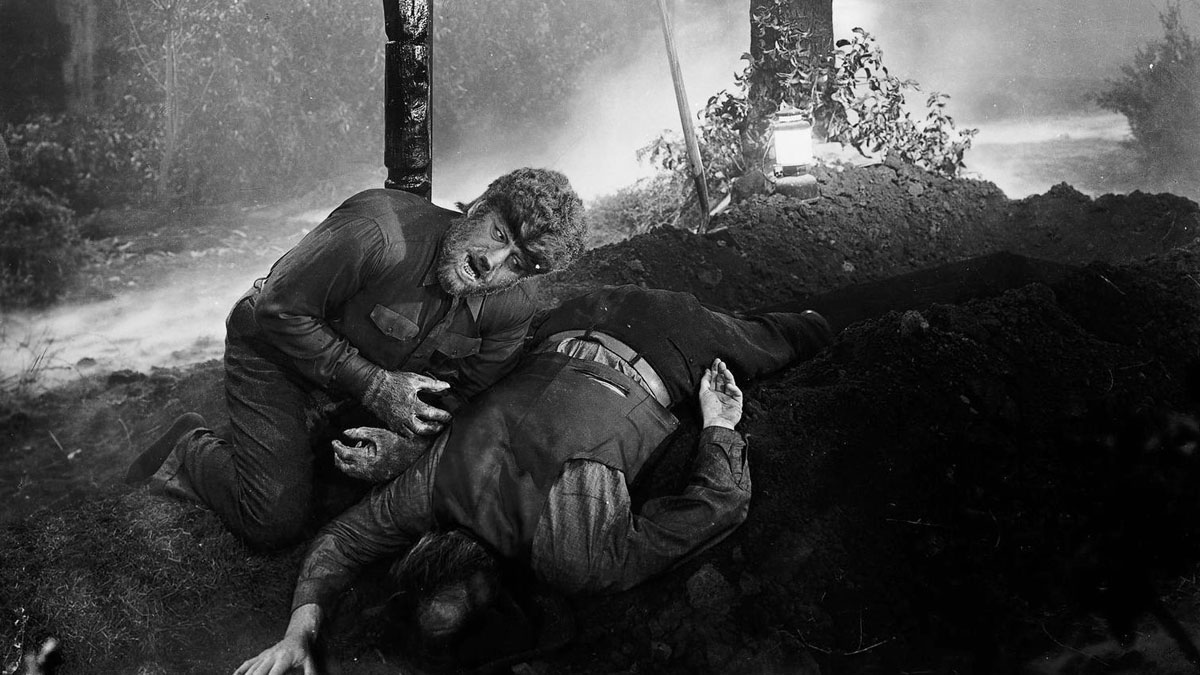
The Wolf Man isn’t discussed in the manner of The Blood on Satan’s Claw or The Wicker Man, but make no mistake: director George Waggner’s film is a touchstone of folk horror (note the terrible “only in nature” primeval splendor of Jack Pierce’s makeup design) and arguably the first such example in American cinema. Writer Curt Siodmak’s script tells an ancient tale tied to the earth, seasoned with ballad-like lines of poesy that also happened—handily—to possess ready-made and lasting pop-culture cachet. These are delivered by Maria Ouspenskaya’s Malava character, who is both the Romani elder and Talbot’s surrogate mother on the werewolf side of his personal hellish equation. The latter is a role in which she can only do so much, like a doctor who speaks to a family about managing the pain of a beloved member. All that remains is what must be done, however limited that may feel.                                  

Universal films don’t often take us from happy and lighthearted to sad and doomed, but that’s how the heart of The Wolf Man beats. It’s the closest a horror picture has ever gotten to the likes of a Mississippi Delta blues. Bela Lugosi’s Dracula did everything he could to continue on as a member of the undead; Talbot sings a different song, which he’ll keep singing in a cadre of upcoming films: he yearns to die. And for the mercy of release. As such, he may be the character we feel the most for in the entirety of the medium. It’s as if Hoss from Bonanza, someone you’d think would be the perfect person to grab a beer with, was instead sitting next to you at the saloon having lost both his arms and asking if you might blow his head off so he could be free of his pain, dagnabbit.

We shudder, perhaps, in recalling thoughts—or pondering present ones—that have entered our own minds during those hard times that songwriter Stephen Foster also enjoined to come again no more. Talbot lacks for hope, and with damn near—sort of—scientific reason. He’s been given not just a death sentence, but a paradoxically perpetual version of the thing. And what does he care the most about? The harm he may do others. After all, a precedent has been swiftly established. The gunk of slashed open throats is lodged under his fingernails come the morning when he awakens as himself again. But that will only last so long, unlike the curse that now governs his life and won’t release his soul. 🩸

COLIN FLEMING

is the author of eight books, including the story collection, If You [ ]: Fabula, Fantasy, F**kery, Hope, a 33 1/3 volume on Sam Cooke’s Live at the Harlem Square Club, 1963, Meatheads Say the Realest Things: A Satirical (Short) Novel of the Last Bro, and a book about 1951’s Scrooge as the ultimate horror film. His work has appeared in Harper’s, The Atlantic, Rolling Stone, The New York Times, Vanity Fair, The Daily Beast, Cineaste, Film Comment, Sight and Sound, JazzTimes, The New Yorker, The Guardian, and many other venues. He’s completing a book called And the Skin Was Gone: Essays on Works of Horror Art. His website is colinfleminglit.com, where he maintains the Many Moments More journal, which, at 2.7 million words and counting as of autumn 2023, is the longest sustained work of literature in history.

How to see The Wolf Man:

RELATED CONTENT
    FRESH BLOOD
GUIDE | ORIGINS
(Karl Freund, USA, 1932)

Love—or what we call love—produces a lot of lip service, which isn’t a reference to kissing. We proclaim our dedication to another, though in reality—if our typical future behavior is any indication—we might as well be saying...

BY COLIN FLEMING  |  February 13, 2025

GUIDE | ORIGINS
(Roy William Neill, USA, 1943)

If you want to have some fun with your fellow horror film aficionados, ask them what they’d rate as the single most effective scene for mood and atmosphere in any of the Universal...

BY COLIN FLEMING  |  November 6, 2025

GUIDE | ORIGINS
(James Whale, USA, 1933)

The early monstrous mass of Universal bogeys put down roots in the pop-culture zeitgeist as deep as any to be found in the most ancient burial grounds. The mesmeric hold of Dracula, the Frankenstein monster...

BY COLIN FLEMING  |  October 26, 2025

RECOMMENDED
    RAVENOUS
GUIDE | ORIGINS

Supernatural

(Victor Halperin, USA, 1933)

This pre-Code offering packs a lot of story into its typically brisk running time, with several plot threads weaving together a (not always successful) tapestry of spooky and criminal doings.

READ MORE >

BY  ANN OLSSON  |  Month 00, 2021

REVIEW

The Keep

(Michael Mann, USA, 1983)

In what could be the fastest-resulting rape revenge movie, a drunken lout brutally forces himself on Ida, the young woman who doesn't return his affections, during a party over Labor Day.

READ MORE >

BY  LAURA KERN  |  Month 00, 2021

REVIEW

We Need To Do Something

(Sean King O'Grady, USA, 2021)

Beast is a lot of movies in one package - fractured fairy tale, belated-coming-of-age story, psychological drama, regional horror film - but above all it's a calling card for its leading lady, Jessie Buckley.

READ MORE >

BY  LAURA KERN  |  Month 00, 2021