GUIDE | ORIGINS

Nosferatu

(F.W. Murnau, Germany, 1922)

BY COLIN FLEMING | October 29, 2026
SHARE:

In movies, if not in life, what genuinely frightens us tends to change over time. Reports of terror-induced panic at showings of 1931’s Dracula leave its viewers incredulous nearly a century later. We become inured and desensitized, our imaginations—a vital fear factor—lessened by the infrequency of their use owing to the internet, phones, and AI. A deadening of our insides that involves staking our imagination through its heart. How fitting it is then that we have F.W. Murnau’s 1922 film Nosferatu—about a certain leader of the undead—to horrify us indefinitely.

It is Dracula without the name, though Murnau wasn’t trying to hide the fact. He was simply going a quasi-bootleg/pirate route, bypassing copyright law and aiming to tailor the film to Germans. Max Schreck is Dracula, now renamed Count Orlok. It’d only been 25 years since Dracula’s publication. Many of the novel’s original readers were still around and would have had no confusion as to what was being adapted. This was a low-budget undertaking, tantamount to an early horror-film form of fan service. Not that Bram Stoker’s widow, Florence, was amenable to the approach, demanding all prints be destroyed, much as Van Helsing and his friends had once tried to snuff out a vampire. But wouldn’t you know: some survived the purge, which was also very undead on their part.

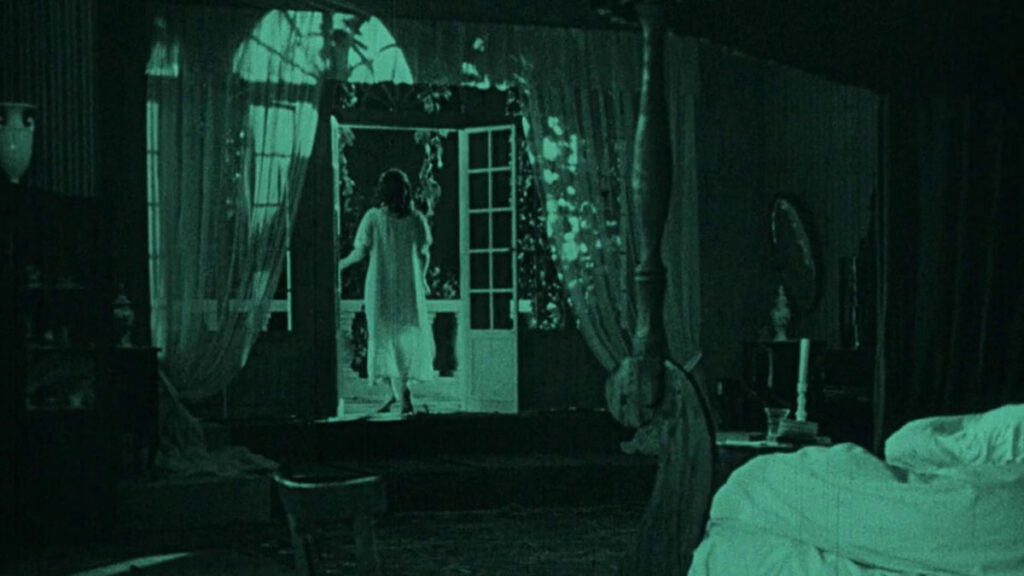
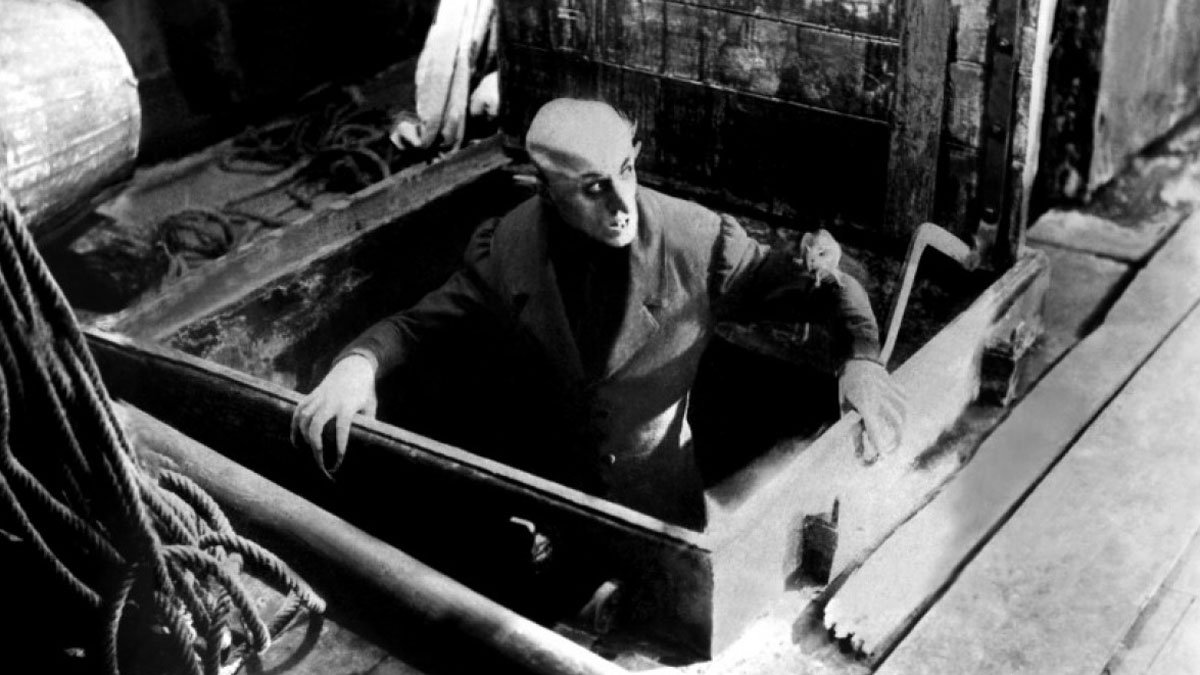
Nosferatu will never fail to be scary. It looks like no horror film, thanks largely to Schreck, who resembles a shaved rat that someone took a paring knife to; his skin is whittled while also being thorny. But it isn’t just his appearance—it’s how he moves. There’s nothing natural or human about any of it. Murnau, like Jean Vigo, was one of cinema’s great poets who married the romantic and the realistic. He knew which effects to deploy and how to use the camera to maximize fluidity. The film’s subtitle “A Symphony of Horror” is a play on the transcendent nature of Murnau’s abilities; his visuals are themselves symphonic. They enmesh, surrounding us as sound does. These are images and they move, but it doesn’t feel enough to call them moving images. Were it possible to film a nightmare and play it back for someone in the morning, it could well resemble Nosferatu. It’s a movie that doesn’t seem of this earth, or at least the waking plane of consciousness. Watch it late at night and you won’t sleep afterward. A decompression period must be provided for the post hoc viewer to settle down again in the land of the living. As we watch, we’re apt to say to ourselves, “I don’t want to do this anymore,” while also loving the experience, because this is what it means to fall for horror, whether for the first time or the latest.

The Dracula of Bram Stoker’s novel performs domestic duties at his castle. He prepares food (excelling at chicken dishes) for Jonathan Harker and makes his bed. It’s impossible to imagine any similarly human activities being carried out by Count Orlok. His arms don’t so much as rest at his sides humanly. The movie feels unsafe. A threat. Source of infection. We can all but smell Orlok’s rank breath. The fetid air of the tomb. Soiled cerements. Infected bandages. And yet it strikes the horror fan as so wonderfully sweet.

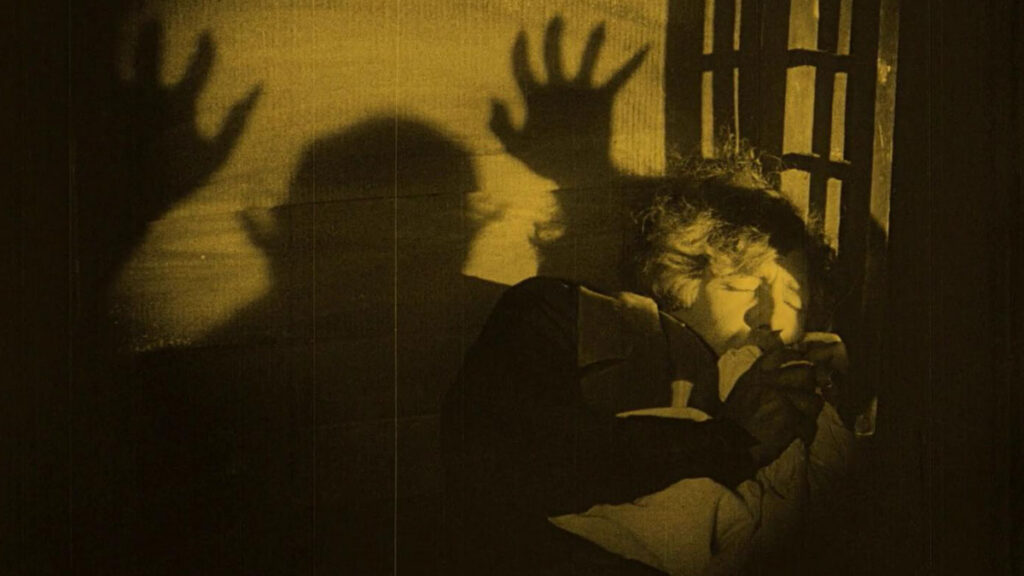
Orlok is a one-vampire plague. A sea of disease-carrying rats in and of himself. A contaminator of continental blood who travels the seas. He’s the Black Death. Sexually transmitted disease. Schreck served in the trenches of World War I. He was a loner who took long, solitary walks in the forest. Contrary to what became a sort of cinematic urban legend, he appeared in many other films other than Nosferatu, in which he grows yet more nightmare-inducing in shadow, as when we see his silhouette, fingernails like distended fangs, mounting the stairs. If horror has a single image that encapsulates the genre/medium, this would be it.

Just as there are rules to both being a vampire (wear sunscreen) and keeping your already-bitten buddy from having to be one for eternity (go to her tomb, cut off her head, stuff some garlic down the neck cavity), so too are there steps that must be adhered to in watching Nosferatu. It needs to be night. Better if going outside in a T-shirt would make you shiver within seconds. Fewer leaves should be on the trees. And above all, commit to not going to bed when you otherwise would have wanted to. 🩸

COLIN FLEMING

is the author of eight books, including the story collection, If You [ ]: Fabula, Fantasy, F**kery, Hope, a 33 1/3 volume on Sam Cooke’s Live at the Harlem Square Club, 1963, Meatheads Say the Realest Things: A Satirical (Short) Novel of the Last Bro, and a book about 1951’s Scrooge as the ultimate horror film. His work has appeared in Harper’s, The Atlantic, Rolling Stone, The New York Times, Vanity Fair, The Daily Beast, Cineaste, Film Comment, Sight and Sound, JazzTimes, The New Yorker, The Guardian, and many other venues. He’s completing a book called And the Skin Was Gone: Essays on Works of Horror Art. His website is colinfleminglit.com, where he maintains the Many Moments More journal, which, at 2.7 million words and counting as of autumn 2023, is the longest sustained work of literature in history.

How to see Nosferatu:

RELATED CONTENT
    FRESH BLOOD
GUIDE | CORE HORROR
(Werner Herzog, West Germany/France, 1979)

Now that the fear economy is booming, you may be kicking yourself for investing everything in love. But before you dump all those stocks, ask yourself the perennial...

BY TOM PHELAN  |  November 12, 2024

REVIEW
(Robert Eggers, USA, 2024)

The year was 1838, when the entire world was permanently overcast, underlit, and draped in smoke, and everyone was unhappy and utterly humorless. Somewhere in Germany...

BY JOSÉ TEODORO  |  December 25, 2024

GUIDE | ORIGINS
(Benjamin Christensen, Sweden/Denmark, 1922)

There is a particular allure to the silent horror movie—the sense that, as a viewer, you haven’t merely stumbled upon something but perhaps you’ve unearthed it.

BY MICHAEL KORESKY  |  November 30, 2023

RECOMMENDED
    RAVENOUS
GUIDE | ORIGINS

Supernatural

(Victor Halperin, USA, 1933)

This pre-Code offering packs a lot of story into its typically brisk running time, with several plot threads weaving together a (not always successful) tapestry of spooky and criminal doings.

READ MORE >

BY  ANN OLSSON  |  Month 00, 2021

REVIEW

The Keep

(Michael Mann, USA, 1983)

In what could be the fastest-resulting rape revenge movie, a drunken lout brutally forces himself on Ida, the young woman who doesn't return his affections, during a party over Labor Day.

READ MORE >

BY  LAURA KERN  |  Month 00, 2021

REVIEW

We Need To Do Something

(Sean King O'Grady, USA, 2021)

Beast is a lot of movies in one package - fractured fairy tale, belated-coming-of-age story, psychological drama, regional horror film - but above all it's a calling card for its leading lady, Jessie Buckley.

READ MORE >

BY  LAURA KERN  |  Month 00, 2021