Horror and mystery: two genres that are often bolstered when one utilizes elements of the other. Some of the most affecting and effective horrors are those with a “Is this real or isn’t it?” through line from the start to as close to the finish as possible, and sometimes beyond. Think of those real-life instances when you told yourself what you saw must have been something else, only to realize that it definitely wasn’t. We become frightened as to whatever else we’re not noticing.
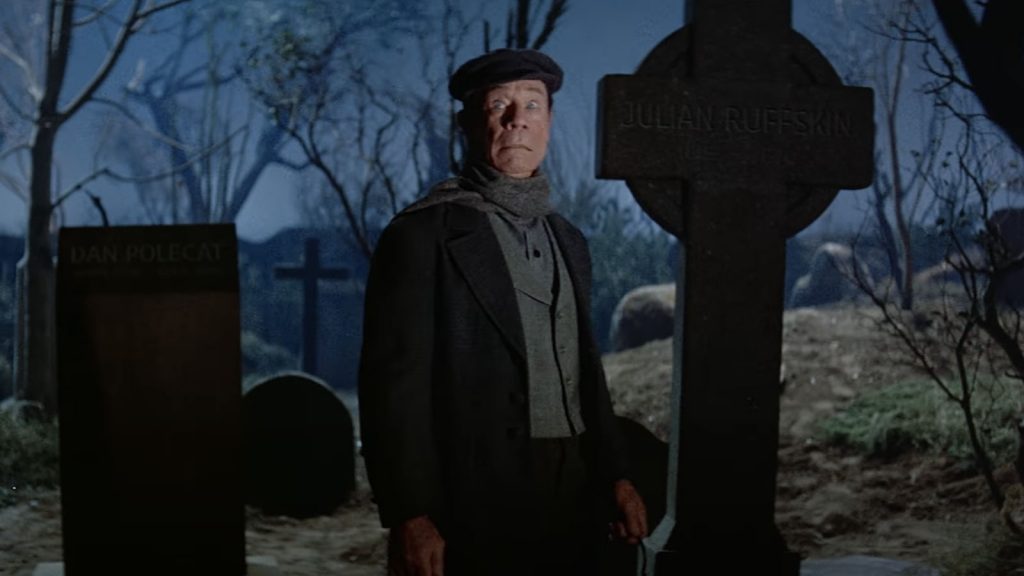
Albert Band’s I Bury the Living (1958) is perhaps the perfect horror film in this potent subcategory. Richard Boone of television’s Have Gun – Will Travel plays Robert Kraft, who serves on a committee that oversees a cemetery. It’s his turn to manage the day-to-day operations of the grounds, much to his chagrin. The job requires him to work from a cold office surrounded by the rows of the buried dead. He’s trained on the job by Andy McKee (Theodore Bikel), a Scotsman who likes his whiskey and his work as a cemetery caretaker. Getting Kraft up to speed amounts to his final duty before kicking back in retirement while still receiving his salary.
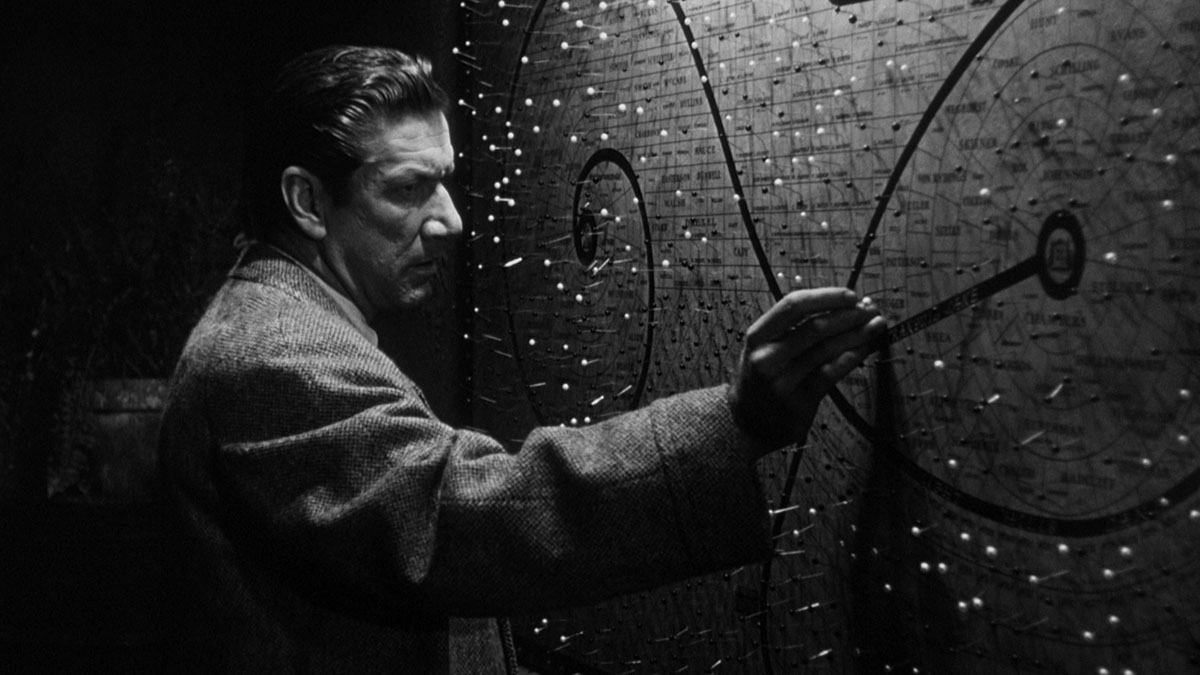
The dominant feature of this office—which is tantamount to a garden shed with a desk and chairs—is a giant map of the cemetery and all its plots on the wall. Empty graves that have been sold are marked with white pins and filled graves with black ones. When someone who bought a plot dies, you swap the colors. Two newly married friends of Kraft’s swing by the office/shed on their way out of town for their honeymoon, having received matching plots for a wedding present—we call that black humor. He’s an everyone’s-pal type; she’s contented. Bliss. Until Kraft mistakenly uses black pins instead of white for their spot, learning shortly thereafter that the couple perished in an automobile accident. Coincidence? Or did he mark them for death?
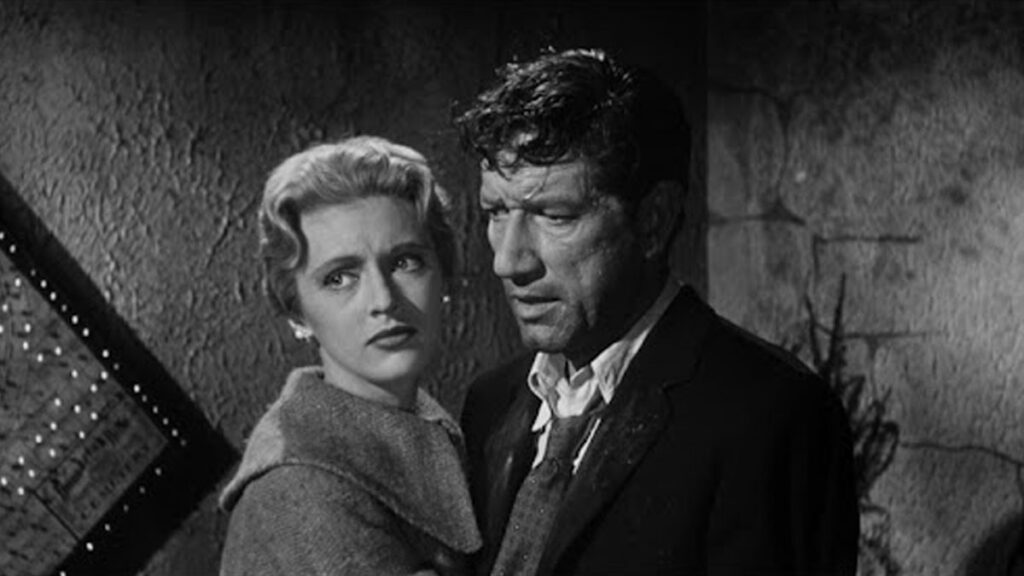
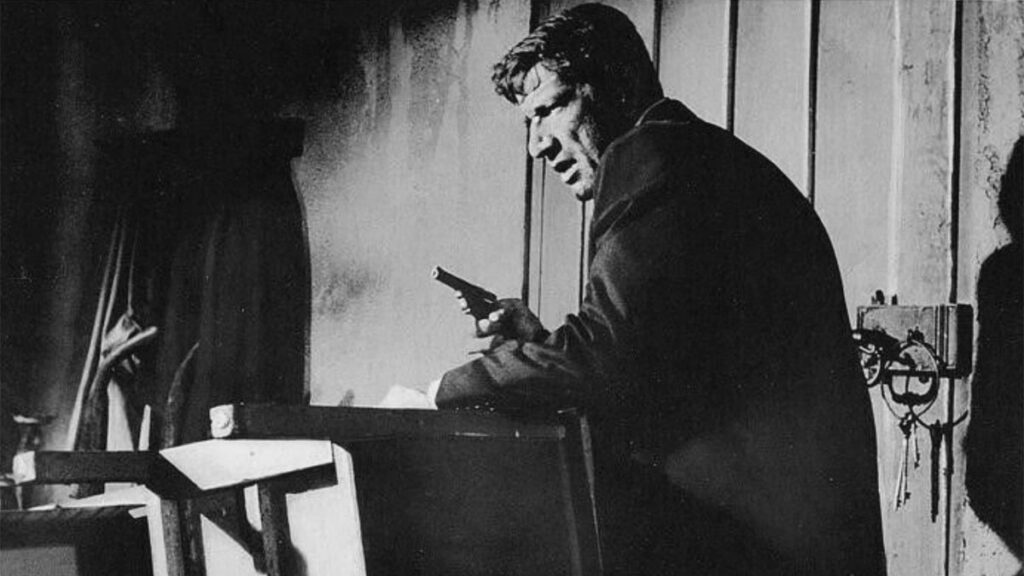
Kraft feels as we probably would, no matter if we’ve never believed in the supernatural. This is a film about guilt, an increasingly rare commodity in a world where nearly everyone always thinks they’re blameless. Not Kraft back in that cemetery office. Nor do the deaths stop. The cops get involved, as do the other shareholders. Black pins are inserted on purpose in what appear to be the most controlled circumstances to dispel the idea that anything is at work beyond highly unlikely, but technically possible, coincidence. Doesn’t matter.
The map towers as this force of utter dread. We can’t bear watching Kraft insert another pin, yet lifting each of them seems like hoisting a hundred-pound weight for him. The dangling stick bundles in The Blair Witch Project, a calm—too calm—sea in Jaws, the salt-pan bathhouse in Carnival of Souls: this map is as unsettling as any of it. We want to shout, “What the hell is happening here?!” only to follow it up immediately with, “No, don’t tell me!” in part because we’re too scared to find out, and also because we’re loving this.
The movie is the cinematic answer to W.F. Harvey’s 1910 story, “August Heat,” about a man out on a long walk who sees a headstone with his name on it, as well as his birthdate, and the date of that day as his death date, in the yard of an artisan who carves these stones. The two men meet, put their heads together, and decide it’d be best for the visitor to stay put so the two of them can wait until midnight, not wanting to take any risks, including a walk across town. Harvey never lets us down from the hook. Rod Serling’s The Twilight Zone learned a thing or two from I Bury the Living (think about the 1960 episode, “Nick of Time,” for instance). It’s a B film that can hold its own against a retinue of horror classics and should be a classic itself. On merit and invention it is, and that title is bang-on clever and such a gripper, paradoxically literal and metaphorical. Sometimes we’re jaded and want to charge a title with sensationalism, but I Bury the Living makes you say, “Okay, I stand corrected.”
The odds keep upping. A man in Paris is made to die with a black pin. Kraft is hardly able to keep going. He’s wrecked. We feel the weight of his guilt, despite no one blaming him. Herbert Anderson is perfectly cast as friendly newsman Jess Jessup, a role reminiscent of Ned “Scotty” Scott as played by Douglas Spencer in 1951’s The Thing from Another World, the buddy/confidant Kraft absolutely needs. Without him, we sense that Kraft would take his own life. He does have a breakdown, which results in him swapping out all the white pins for black pins. You’re going to want to see what happens next. And if you’ve already seen it, you’ll want to see it again.
This is intense supernatural skulduggery. The mood of the film is ideal for October and November evenings with the heat down low so you can get in on that chill emanating from Kraft’s office/shed, where even the whiskey can’t warm you as you take another look at the map on the wall with all its pins that can be pulled out and stuck in with the greatest of physical ease. Could it really be that arbitrary? What if it is? Now that’s horror. Also: you have a new game to try at home with the gang, if you dare. Sketch out a map of the place and grab the thumbtacks. Should be fine. 🩸
is the author of eight books, including the story collection, If You [ ]: Fabula, Fantasy, F**kery, Hope, a 33 1/3 volume on Sam Cooke’s Live at the Harlem Square Club, 1963, Meatheads Say the Realest Things: A Satirical (Short) Novel of the Last Bro, and a book about 1951’s Scrooge as the ultimate horror film. His work has appeared in Harper’s, The Atlantic, Rolling Stone, The New York Times, Vanity Fair, The Daily Beast, Cineaste, Film Comment, Sight and Sound, JazzTimes, The New Yorker, The Guardian, and many other venues. He’s completing a book called And the Skin Was Gone: Essays on Works of Horror Art. His website is colinfleminglit.com, where he maintains the Many Moments More journal, which, at 2.7 million words and counting as of autumn 2023, is the longest sustained work of literature in history.

No other horror movie has ever matched the elemental perfection of Jaws. There are the avowed summits of the genre, for sure, but even such cornerstones of screen terror as Psycho...
BY MICHAEL KORESKY | October 31, 2021
Robert Wise—director of the two best Broadway-on-celluloid adaptations in human history—attempts and achieves the improbable here: he sets a Robert Louis Stevenson short story about...
BY FRANK FALISI | November 4, 2025
After the relative success of American International Pictures’ 1963 release of Roger Corman’s The Raven, the studio quickly reunited the same fearsome trio of...
BY ANN OLSSON | October 23, 2024
This pre-Code offering packs a lot of story into its typically brisk running time, with several plot threads weaving together a (not always successful) tapestry of spooky and criminal doings.
READ MORE >
BY ANN OLSSON | Month 00, 2021
In what could be the fastest-resulting rape revenge movie, a drunken lout brutally forces himself on Ida, the young woman who doesn't return his affections, during a party over Labor Day.
READ MORE >
BY LAURA KERN | Month 00, 2021
Beast is a lot of movies in one package - fractured fairy tale, belated-coming-of-age story, psychological drama, regional horror film - but above all it's a calling card for its leading lady, Jessie Buckley.
READ MORE >
BY LAURA KERN | Month 00, 2021