GUIDE | CORE HORROR

The Fly

(Kurt Neumann, USA, 1958)

BY COLIN FLEMING | November 21, 2026
SHARE:

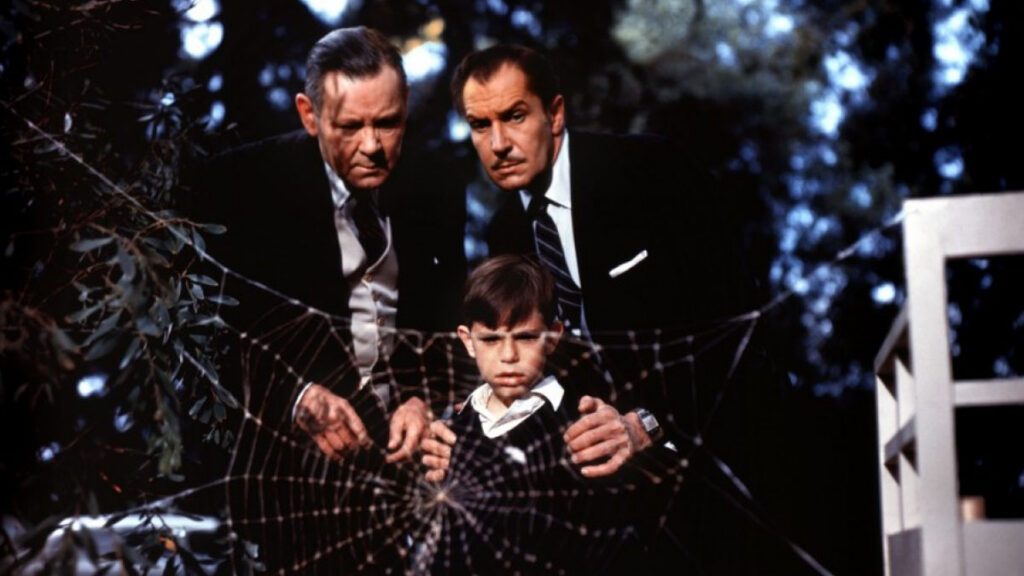
Do you ever stop to wonder what truly saves us in this world? Before, that is, advancing to another, allowing that there is such a thing. Is it purpose? Love? Helping others? Connection? Making sure your neighbor is okay as part of being yourself? In the 1958 motion picture The Fly, scientist, humanitarian, husband, father, progressive thinker, ambassador of empathy, and friend André Delambre (David Hedison) represents a fusion of all the above. His experiments with the transference of matter in his Montreal lab are conducted in hope of lightening humankind’s burden and reducing privation.

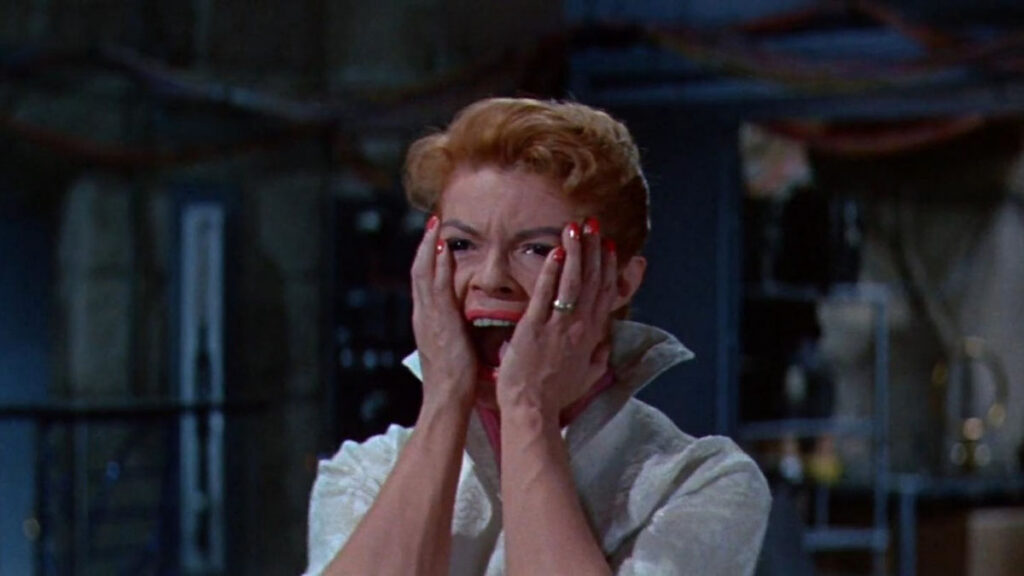
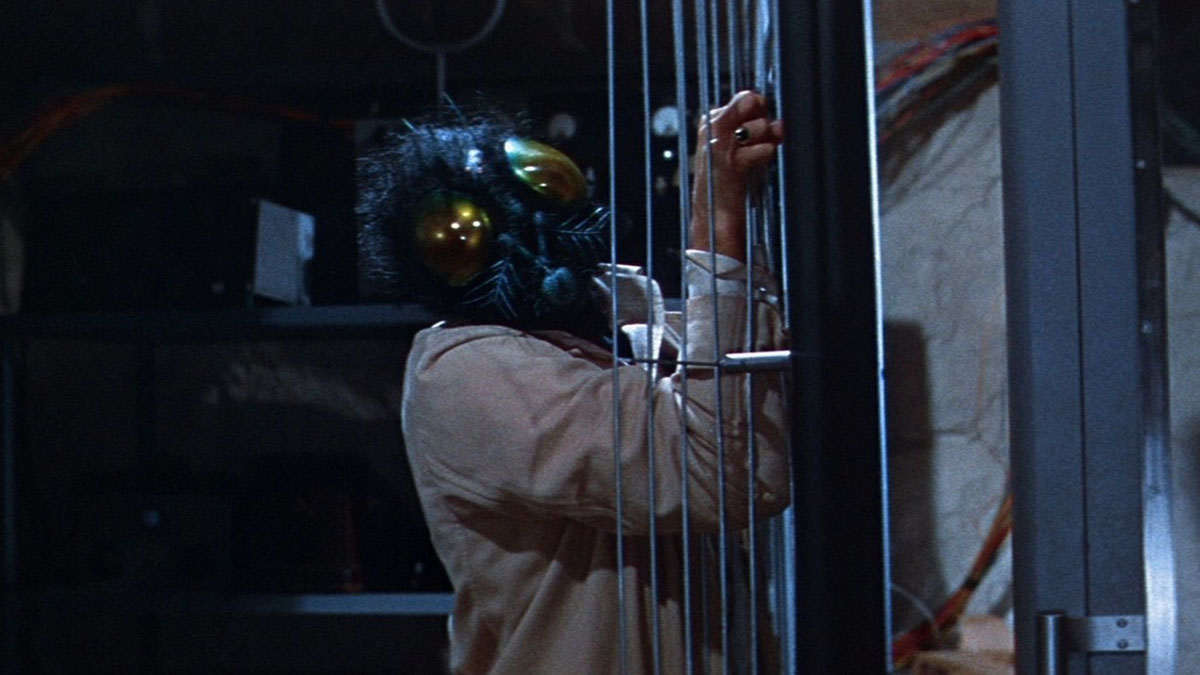
Matters don’t proceed as André wishes, and his DNA becomes crossed with that of a bluebottle fly, an insectoid riff on the idea of the best-laid plans of mice and men going way, way wrong. André is a model of a man who loves well and is loved well. His wife Hélène (a relatable Patricia Owens) does something for him in the end—when the end is inevitable—that shocks us at the film’s beginning when we learn of this act before the flashback format kicks into its melancholic gear, and then again near the movie’s close, when we see the businesslike manner in which she carries out her task of unmitigated dread.

Anyone who’s watched a loved one suffer with no mercy to be legally delivered will recognize their own experiences in these scenes. The Fly is archetypal horror. It was said of The Velvet Underground that very few people heard their music when it first came out, but those who did went out and formed a band. The Fly is similar in that you encounter variants of it all the time, which has been true for many decades.

The film was followed by a sequel, Return of the Fly (1959), along with a rather disconnected third entry called Curse of the Fly (1965), and was later remade by David Cronenberg in the 1980s. This original version is based on a 1957 short story by George Langelaan (production moved fast back then) and directed with restraint by Kurt Neumann (who himself would die only at age 50, five weeks after shooting wrapped).

The 1930s were an extended big bang for cinematic horror. Much of the groundwork for the popular cultural zeitgeist—monster-wise—was set down in huge pieces courtesy of the genre’s under-the-big-top type of movies: Dracula, Frankenstein, The Mummy. The 1940s had a larger haul of films that will last as long as there are people intelligent enough to locate and experience them, but no horror decade has gifted us more in terms of prescience and wisdom than the 1950s, when science fiction became an essential aspect of the medium because it helped extend it further into the real world by understanding that what is up on the screen could well be watching us for its own share of fright-triggered jolts.

Life is scary. Our thoughts are scary. Politics are scary. Those who serve—an oft-flimsy, disingenuous word in this context—as the leaders of nations (or, hell, your condo board) are scary. Horror was maturing in the 1950s, even when a movie like The Fly seemed to appeal most—on its surface, anyway—to tweens, landing as it did thick in the middle of a child’s conception of “cool” and “crazy.”

The Incredible Shrinking Man (1957) is another film of the same type of influence—and who among us doesn’t have extended periods when they feel two inches tall?—but The Fly offered an opening into a world through which other films would proceed, like Dracula had in 1931.

One could read it as a study in euthanasia, and of sufficient efficiency in that regard as to simultaneously make an intelligent case for it. Imagine that: the likes of this sobering, provocative, unflinching, merciful idea stashed away in a film whose initial target audience was friend groups of 12-year-old boys hanging at the movie theater for a couple Saturday matinees. Conceivably that’s projection well after the fact, a form of retroactive supposition, because when one watches The Fly and charts its measured progression, grapples with the questions it raises, and observes how its characters try to answer them, it’s hard to disbelieve that the movie wasn’t meant for all of us.

There is what’s tantamount to a love scene—a violent saying of goodbye, whose violence is rendered void by sheer determined tenderness—near the picture’s close that could make you cry. We then venture to a factory that houses the drill press we already know about from the start. This press will be used twice; that second instance evinces not only a love for a spouse, but for strangers—fellow humans—never to be met. A humanistic pulping.

The movie features Vincent Price (who’d return in the sequel) as a witness, someone who tries to sift through information and process what has happened to the best of his abilities. He knows, for most of the film, less than we do as viewers, but we’re all trying to get somewhere here, and that’s to a place of truth. In this regard, The Fly is a unifying movie. It doesn’t demand to be seen, but it deserves to be, because it wants us to deserve whatever it is that saves us and sets us free. And should a movie have a role to play in said saving, then Godspeed. 🩸

COLIN FLEMING

is the author of eight books, including the story collection, If You [ ]: Fabula, Fantasy, F**kery, Hope, a 33 1/3 volume on Sam Cooke’s Live at the Harlem Square Club, 1963, Meatheads Say the Realest Things: A Satirical (Short) Novel of the Last Bro, and a book about 1951’s Scrooge as the ultimate horror film. His work has appeared in Harper’s, The Atlantic, Rolling Stone, The New York Times, Vanity Fair, The Daily Beast, Cineaste, Film Comment, Sight and Sound, JazzTimes, The New Yorker, The Guardian, and many other venues. He’s completing a book called And the Skin Was Gone: Essays on Works of Horror Art. His website is colinfleminglit.com, where he maintains the Many Moments More journal, which, at 2.7 million words and counting as of autumn 2023, is the longest sustained work of literature in history.
How to see The Fly:

RELATED CONTENT
    FRESH BLOOD
GUIDE | CORE HORROR
(David Cronenberg, USA, 1986)

It’s an unfortunate fact of life: even super-smart women sometimes end up with terrible boyfriends. This, along with a very different tragic, universal reality—everyone’s body radically changes...

BY VIOLET LUCCA  |  October 31, 2022

GUIDE | CORE HORROR
(Terence Fisher, UK, 1964)

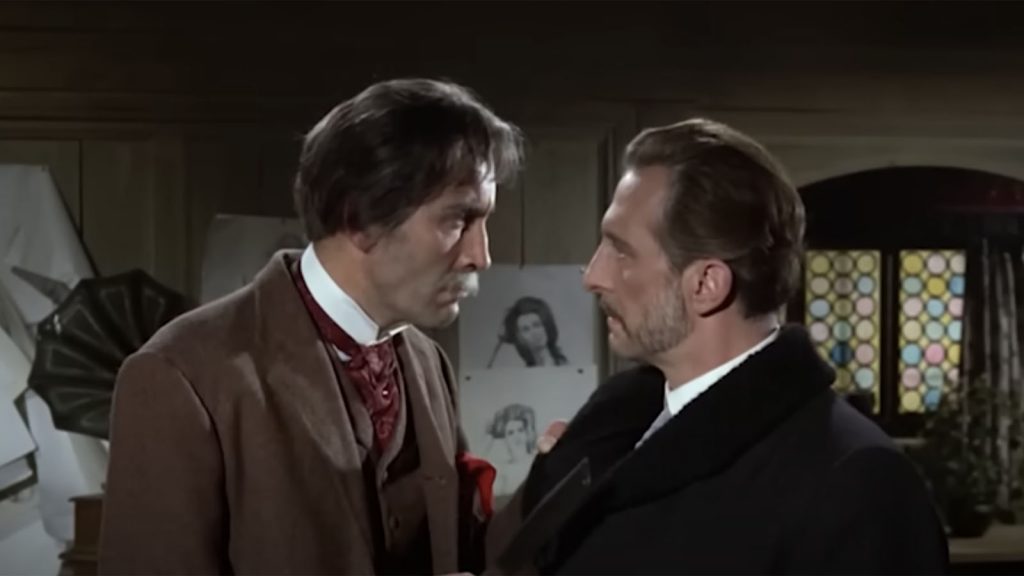
To love Hammer horror films is to love the look of them and probably also have an abiding affection for the fall, given that it always seems to be autumn in the world of Hammer. The forest through which many a damsel and barmaid...

BY COLIN FLEMING  |  October 28, 2024

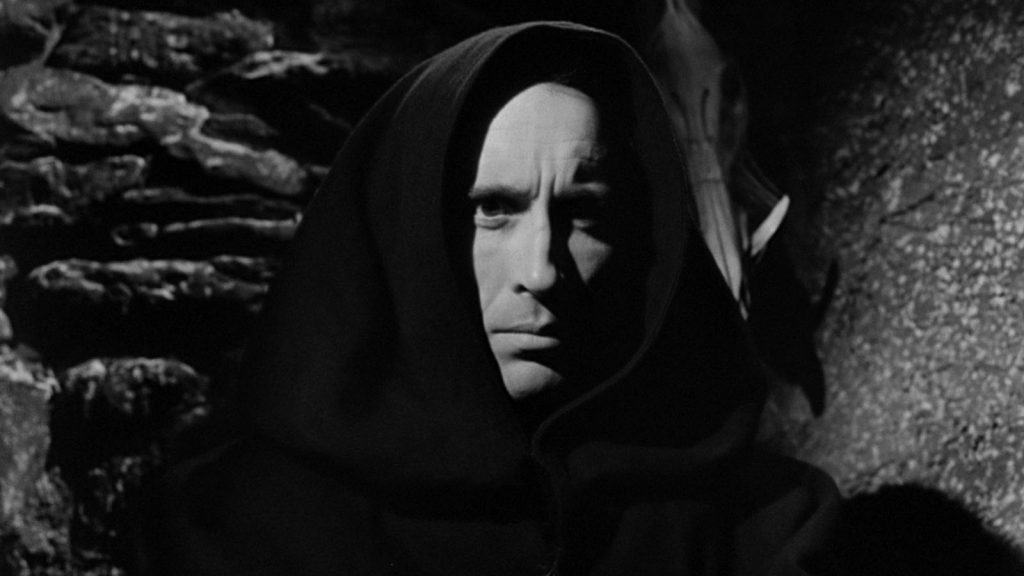
Walpurgis Night and the spell cast by 1960’s The City of the Dead.

Just about everyone loves Halloween—and if someone tells you they don’t, you might wish to keep your distance—but few people are aware of the spring’s variant on All Hallow’s Eve.

BY COLIN FLEMING  |  April 30, 2024

RECOMMENDED
    RAVENOUS
GUIDE | ORIGINS

Supernatural

(Victor Halperin, USA, 1933)

This pre-Code offering packs a lot of story into its typically brisk running time, with several plot threads weaving together a (not always successful) tapestry of spooky and criminal doings.

READ MORE >

BY  ANN OLSSON  |  Month 00, 2021

REVIEW

The Keep

(Michael Mann, USA, 1983)

In what could be the fastest-resulting rape revenge movie, a drunken lout brutally forces himself on Ida, the young woman who doesn't return his affections, during a party over Labor Day.

READ MORE >

BY  LAURA KERN  |  Month 00, 2021

REVIEW

We Need To Do Something

(Sean King O'Grady, USA, 2021)

Beast is a lot of movies in one package - fractured fairy tale, belated-coming-of-age story, psychological drama, regional horror film - but above all it's a calling card for its leading lady, Jessie Buckley.

READ MORE >

BY  LAURA KERN  |  Month 00, 2021