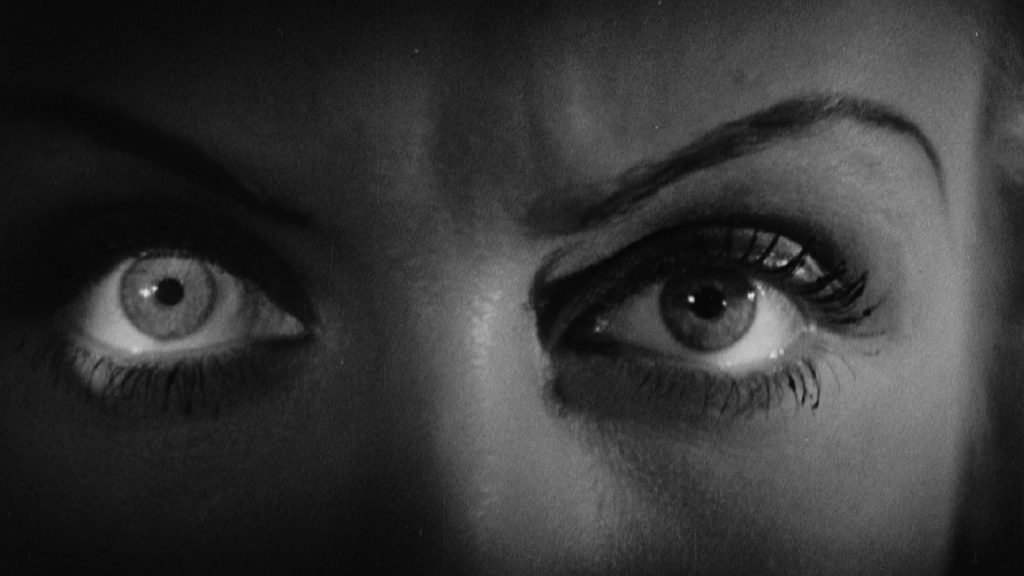
A lightning flash, disembodied/strobing eyes, a shadowy owl, gusted leaves, then cut to a church graveyard with hordes of bats emanating from the steeple overhead and a clock revealing the witching hour of midnight has just struck. So begins Disney’s 1929 animated short, The Skeleton Dance, the studio’s first entry in its revolutionary Silly Symphony series, an essential work in fear cinema that begs the question of how old a child should be before they’re deliberately frightened.
The film originated with Walt Disney paying a call on his old buddy Carl Stalling in 1928 during a stopover in Kansas City en route to New York to strike a distribution deal for his new Mickey Mouse cartoons and record a soundtrack for the ingratiating vermin’s first sound vehicle, Steamboat Willie. The mouse was loose and quickly growing. Soon, he’d take over the world. Or, at least, commandeer a big wheel of cheese of American popular culture. Stalling, who was working as a movie-house organist before becoming a Disney staff composer, had a supplementary idea to bolster Walt’s brand: combining novelty cartoon subjects with symphonic music. Like, say, a treatment of human skeletons emerging from the grave and kicking up their heels at an unholy Jazz Age party of death. Sold, said the mouse mogul.
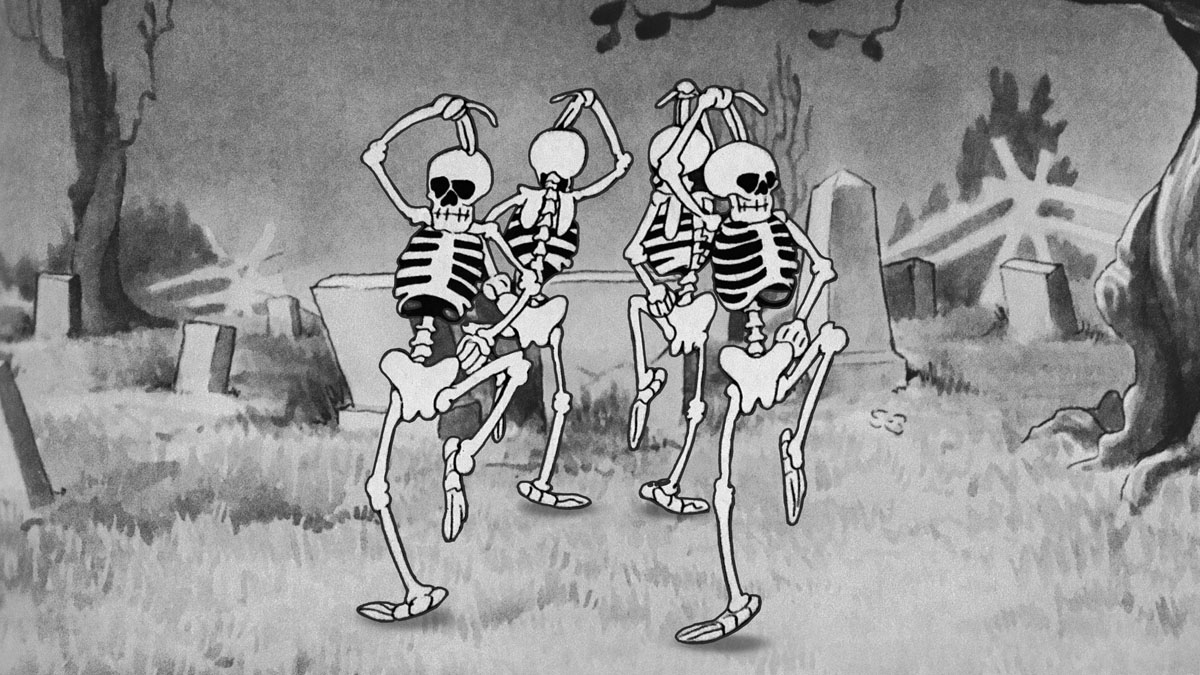
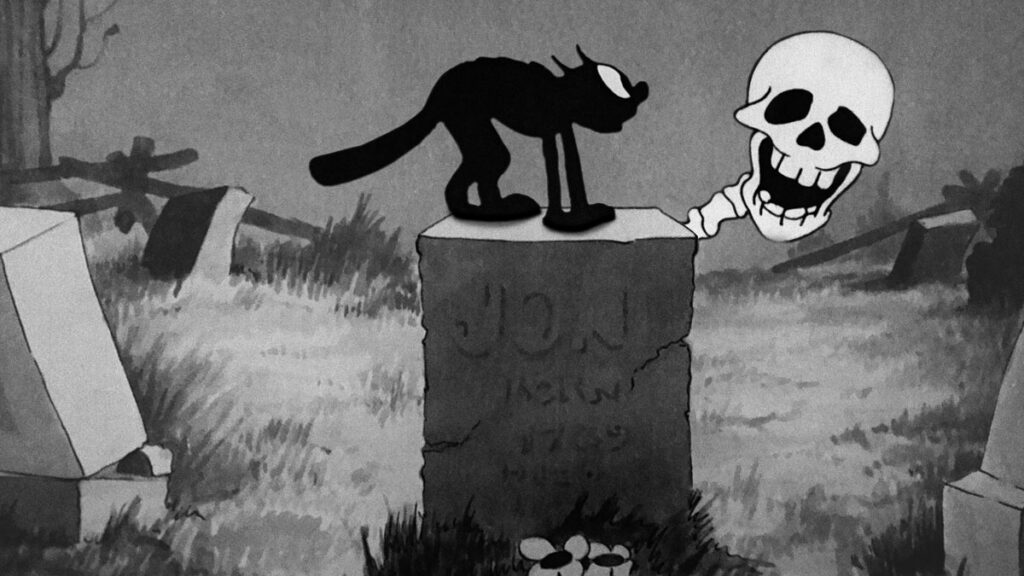
The Skeleton Dance is some five minutes long, but in terms of cultural impact, it might as well have no end. Certain works are always running, after a fashion. Two black cats stand atop headstones, hissing and spitting at each other. From beneath the marker between them emerges our first skeleton, of which there will be four—don’t want to oversaturate the screen with bones. These masterful early Disney cartoons could be as fluid as a Shakespeare sonnet, with a high imagistic quotient, but without becoming too busy in the sensory regard. Disney and his animators like Ub Iwerks, who did the lion’s share of the work on The Skeleton Dance, understood how to let these come-to-life drawings breathe. The eye isn’t ordered where to go; rather, it finds its own way, with the viewer as explorer. One watches The Skeleton Dance and feels a freedom of observation as if having elected to investigate the spooky old New England or New York (for this must be the northeast of Nathaniel Hawthorne and Washington Irving) town cemetery with its long-standing legend about what goes down there. Or up, as it were.
Disney trusted his audience. He wasn’t afraid to “get weird,” and The Skeleton Dance is plenty odd. The skeletons are well-rehearsed, like this is their latest performance in a string of them. Another season of self-robbed grave-dancing outside the house of God, same as another season of The Nutcracker. They perform with or without us—we just happen to be here. The owl and the cats are troubled, knowing unnatural order when they see it. One skeleton rips a couple bones from another, which causes the latter to fall to all fours, with its partner, if that’s the correct word, using the bones as mallets to play the presented spine—it borders on the sexual—xylophone-style. (Later, the skeletons fuse as one, an orgy of bones.) A skull is hurled as a weapon in an airborne nod to Irving’s “The Legend of Sleepy Hollow,” but The Skeleton Dance is sui generis. It’s a work for the general populace, but every bit as avant-garde as Luis Buñuel’s Un chien andalou, also from 1929. Duke Ellington was similarly blending experimental and commercial art in the jazz medium. The true artists of the age progressed, whether they were Louis Armstrong, T.S. Eliot, or the Marx Brothers, all of whom had some Disney in them, and vice versa. Disney wasn’t corporate pablum. The studio aimed to innovate, but accessibly.
A contemporaneous review stated that this wasn’t a film for your kids, no joke intended. Who knows how many youngsters saw The Skeleton Dance over the years—especially in the early era of cable—and were, as a result, drafted into horror. Fundamentally discomfited by the Disney Channel! An adult watching may find themselves wondering if the skeletons had any say in the matter of To dance or not to dance? Could they opt out and stay in the ground? Or is this how it goes and must be, and one’s beloved, but stolid, late parent is also compelled to cut a rug—or graveyard lawn—on nights when cats expectorate, the belfry disgorges a legion of bats, and the leaves seem to flee the flashing lightning? And what if you, the living person, hates to dance, and will soon (relatively speaking) be made to hoof it until the end of time? 🩸

 JustWatch
 FRESH BLOOD