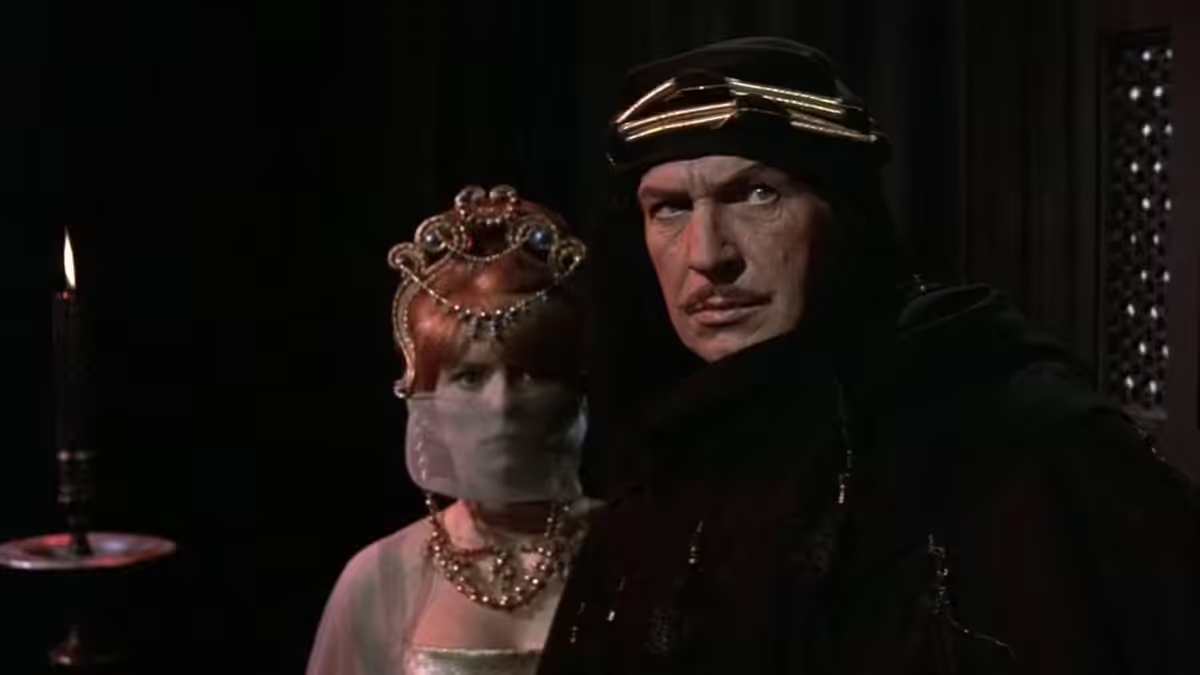
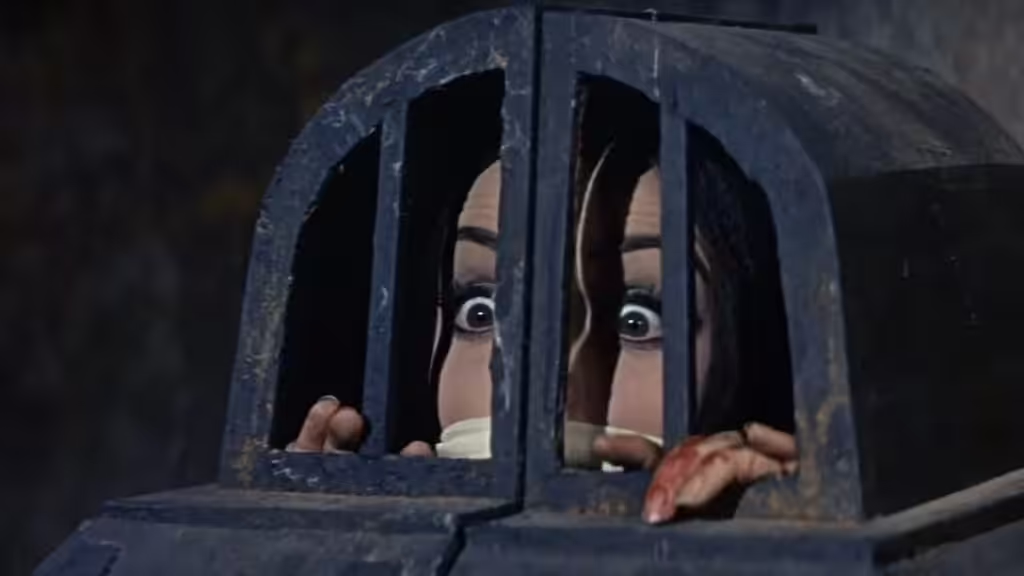
Smart, sinister, colorful (back to this in a minute), nuanced, expansive, repellent, beckoning, dastardly, placating, and inspiring, Roger Corman’s 1964 The Masque of the Red Death isn’t only the apotheosis of Edgar Allan Poe adaptations, but of mid-1960s horror as well. It planted the highest-flying flag firmly in that middle ground between late 1950s masterworks like Hammer’s Dracula and William Castle’s House on Haunted Hill and 1968’s Night of the Living Dead and new modes of terror filmmaking. As a piece of film history, it’s a big deal, and it has only aged better as the decades march on, which means it can also be a big deal for you today should you choose to watch it.
The Masque of the Red Death was the film that Corman had wished to initiate his Poe cycle with, but, due to budgetary constraints, began instead with 1960’s House of Usher. He envisioned a sweeping, totemic work, a form of cinematic sorcery with richly textured scenes and hypnotic sway, which is exactly what the finished movie delivers. Plot elements from Poe’s “Hop-Frog,” a bizarre and wicked little 1849 story, are sprinkled amid the general outline of the more famous titular 1842 tale, which itself had Biblical edges. Sometimes, the world, or the ruling, entitled, dehumanizing bodies and sects within it, need a ritualistic cull, and in this capacity, The Masque of the Red Death numbers among the ultimate “Well, they had that coming, didn’t they?” films and a call to arms, ideologically speaking.
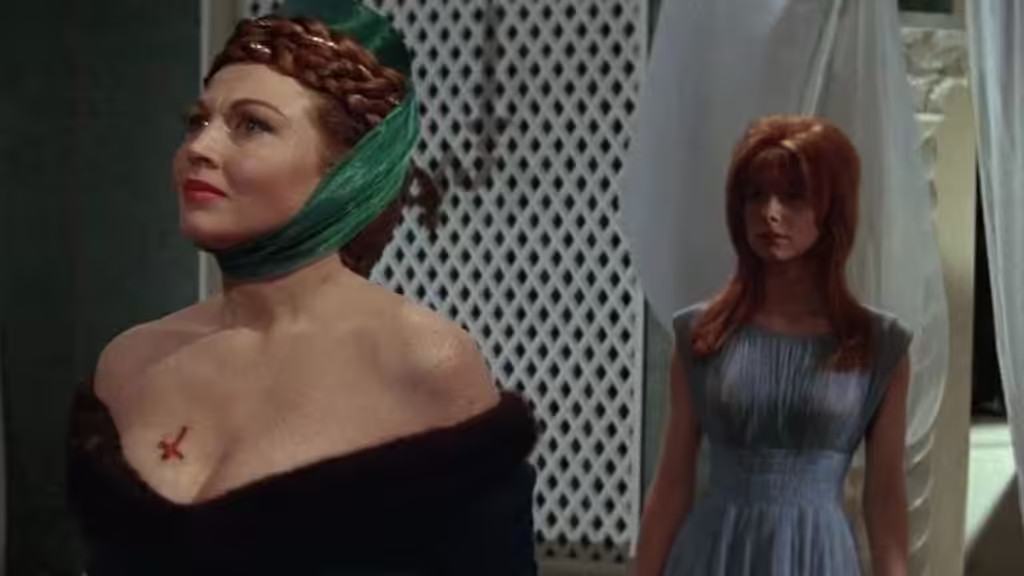
Charles Beaumont and R. Wright Campbell wrote the script, with Vincent Price, in a pinnacle role for a pinnacle performance, playing Prince Prospero (and the face of plague, no less!), with Hazel Court as his mistress Juliana and Jane Asher as Francesca, the innocent peasant girl who finds herself at the party from hell. Beaumont, like The Pit and the Pendulum writer Richard Matheson, would engineer some corking scripts for Rod Serling’s The Twilight Zone, utilizing his gift for making the small become big, which is what one has to do in a sense with Poe, given that he’s not a “and then this happened and then this and then that” twisty plot fellow.
The movie feels hyper-cinematic, but naturally so. This is pure cinema, unleavened by external influence or overlap, as if this thing could only play out on a screen in a theater, where it jolts our sensibilities and reassembles our expectations as to what is possibly “out there.” One may think of a heretofore unglimpsed creature in the depths of an ocean trench; the creature can exist nowhere else, be seen nowhere else, is like nothing else, only now we’re somehow here to see it. Corman had a vision with his Poe films down to the last detail, and everything in The Masque of the Red Death has purpose.

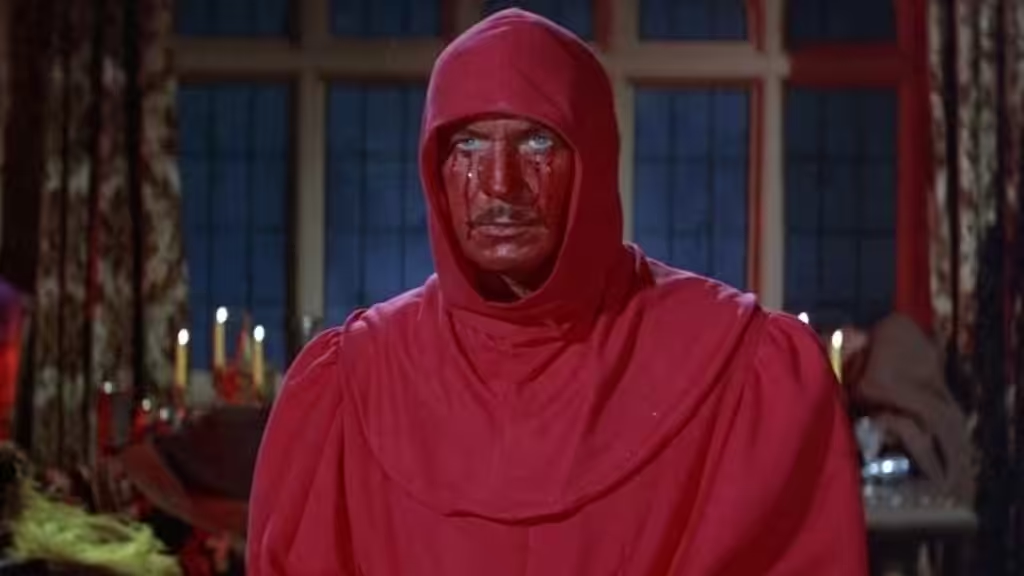
It’s a film that has been shown “early” to many future horror fans, having been a staple of high-school English classes whose students had lately read the Poe story, back when students could read a full story. Colors are key, with their shades, juxtapositions, symbolic meanings, and implications, and function as characters themselves. The movie is akin to a series of paintings in motion, and you could hang scenes from the work on a museum wall, the same as you could the dissolves from Orson Welles and Gregg Toland’s Citizen Kane.
Patrick Magee, with his ever-expressive face, excels as the kind of undercarriage-tonguing hanger-on you want to punch in that face, but he’s lit up—literally—in delightfully satisfying fashion, courtesy of Skip Martin’s court jester. Most of the film pertains to a party, and it’s hard not to think of detached, modern-day “elites” and their sinecures of insanity as we watch; the unexamined, gilt (and always guilt-free) lives, posturing, off-screen performative culture. There’s a sex scene between a nubile and the Devil, and if that doesn’t make you think of 80-year-old billionaires climbing atop someone 50 years their junior for a few toggles of the old in-and-out as though this was an add-on perk to their divine-right gift basket from the netherworld gods-in-reverse, then you just might be one of them.
Corman fretted that people—by whom he presumably meant critics—would say that he filched from Ingmar Bergman’s The Seventh Seal (1957), but his Masque of the Red Death relies more on itself than it even does on Poe. It’s Corman’s Sgt. Pepper’s Lonely Hearts Club Band (Asher, incidentally, would have a long relationship with The Beatles’ Paul McCartney), the vessel that has left familiar channels for waters all its own.
The sets were left over from the British film Becket, shot earlier in the year, the crew was English (including cinematographer Nicolas Roeg doing the work of his life), the film’s setting was Italy, meaning that this is a European picture, a British picture, and an American picture made by a man hailing from Detroit. It smacks of a work that has Western Hemisphere corruption covered. No wonder they added Satanism.
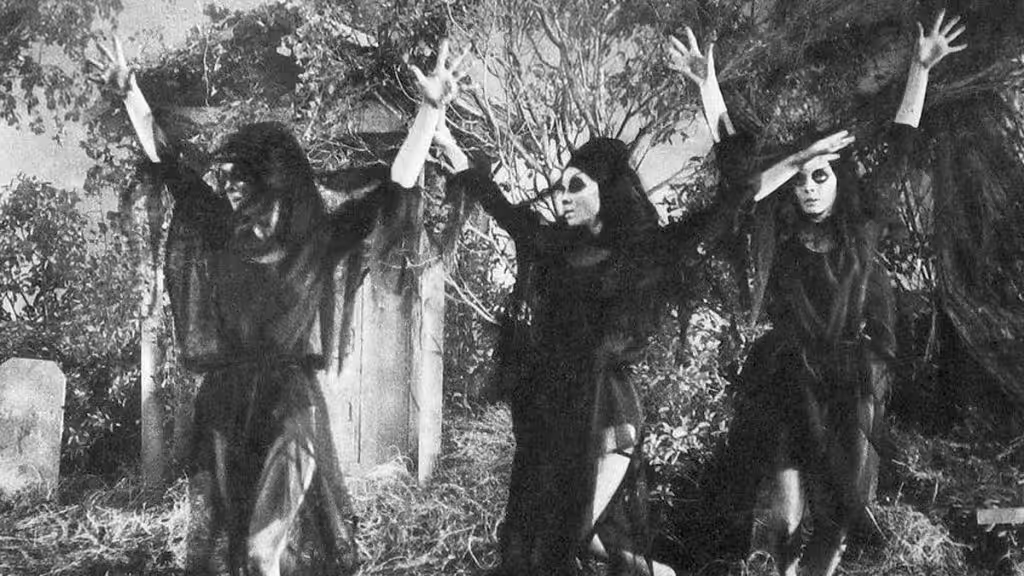
The Masque of the Red Death is also painfully relevant in a culture of (handheld) screen addiction, weaponized classism, rampant and countenanced sexual criminality, despotism become increasingly tyrannical through narcissism, dismissed mental illness, and sociopathic demands of and needs for attention. When the cloaked figures who have assembled outside Prospero’s castle walls get down to business, we are, as sports fans say, pumped and jacked, if also crestfallen that we’re unlikely to find them forgathered and fine-tuning their battle plan outside of our own relevant walls. 🩸
is the author of eight books, including the story collection, If You [ ]: Fabula, Fantasy, F**kery, Hope, a 33 1/3 volume on Sam Cooke’s Live at the Harlem Square Club, 1963, Meatheads Say the Realest Things: A Satirical (Short) Novel of the Last Bro, and a book about 1951’s Scrooge as the ultimate horror film. His work has appeared in Harper’s, The Atlantic, Rolling Stone, The New York Times, Vanity Fair, The Daily Beast, Cineaste, Film Comment, Sight and Sound, JazzTimes, The New Yorker, The Guardian, and many other venues. He’s completing a book called And the Skin Was Gone: Essays on Works of Horror Art. His website is colinfleminglit.com, where he maintains the Many Moments More journal, which, at 2.7 million words and counting as of autumn 2023, is the longest sustained work of literature in history.
The first thing we lay eyes on is… an eyeball! No enveloping head. Just an eyeball attached to an optic nerve, floating...
BY JOSÉ TEODORO | April 5, 2026
Shot over roughly one week in a converted supermarket decked out with makeshift forest foliage and an overload of (toxic) fake fog for about $75,000 of Roger Corman’s own...
BY LAURA KERN | April 5, 2026
Edgar Allan Poe wasn’t exactly a lover of plausibility. He may not have been a lover of anything, despite popular culture’s love of him, preferring to wander dark streets at ungodly...
BY COLIN FLEMING | April 5, 2026
This pre-Code offering packs a lot of story into its typically brisk running time, with several plot threads weaving together a (not always successful) tapestry of spooky and criminal doings.
READ MORE >
BY ANN OLSSON | Month 00, 2021
In what could be the fastest-resulting rape revenge movie, a drunken lout brutally forces himself on Ida, the young woman who doesn't return his affections, during a party over Labor Day.
READ MORE >
BY LAURA KERN | Month 00, 2021
Beast is a lot of movies in one package - fractured fairy tale, belated-coming-of-age story, psychological drama, regional horror film - but above all it's a calling card for its leading lady, Jessie Buckley.
READ MORE >
BY LAURA KERN | Month 00, 2021