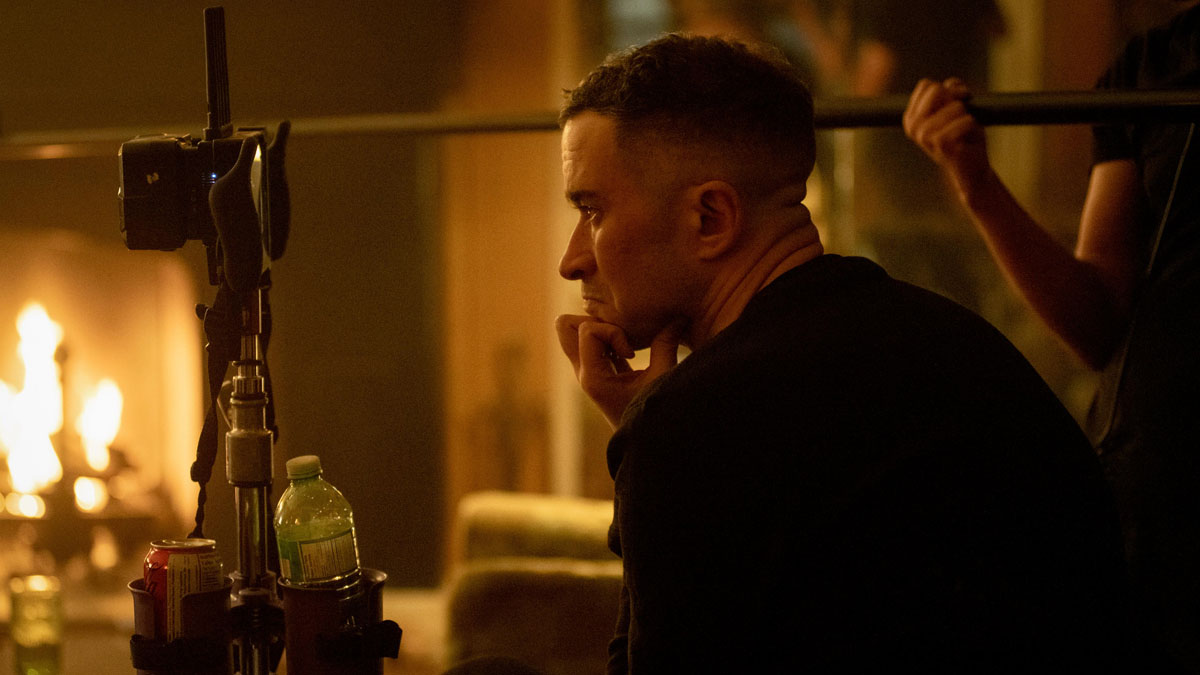
Bryan Bertino scares the daylights out of me. It’s axiomatic that horror movies are the stuff of nightmares, but I can’t think of another director whose movies so thoroughly approximate the bleak, inexorable logic of terrible dreams. From 2008’s The Strangers to his most recent film Vicious, Bertino’s commitment to claustrophobic spaces and unexplainable (as well as unexplained) violence has few parallels in current American cinema. Evil is the primary ambience, ever-present, and only ever encroaches—never retreats, at least for long.
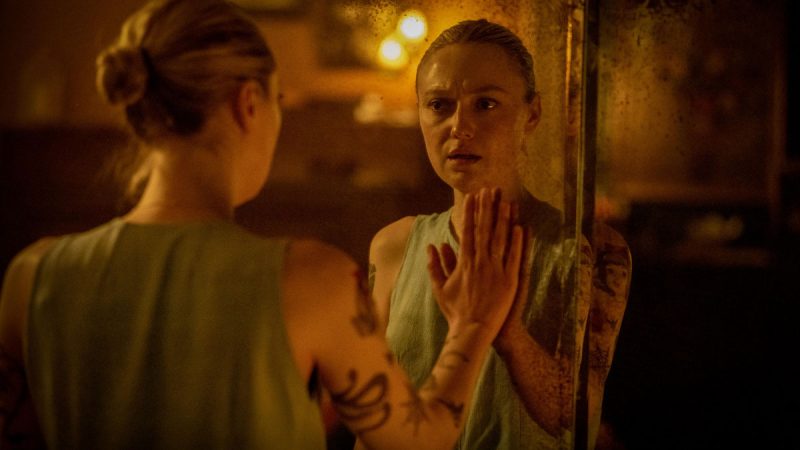
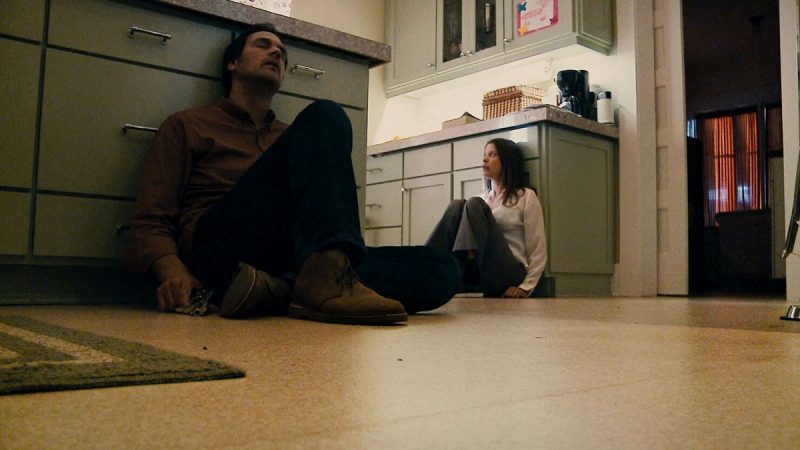
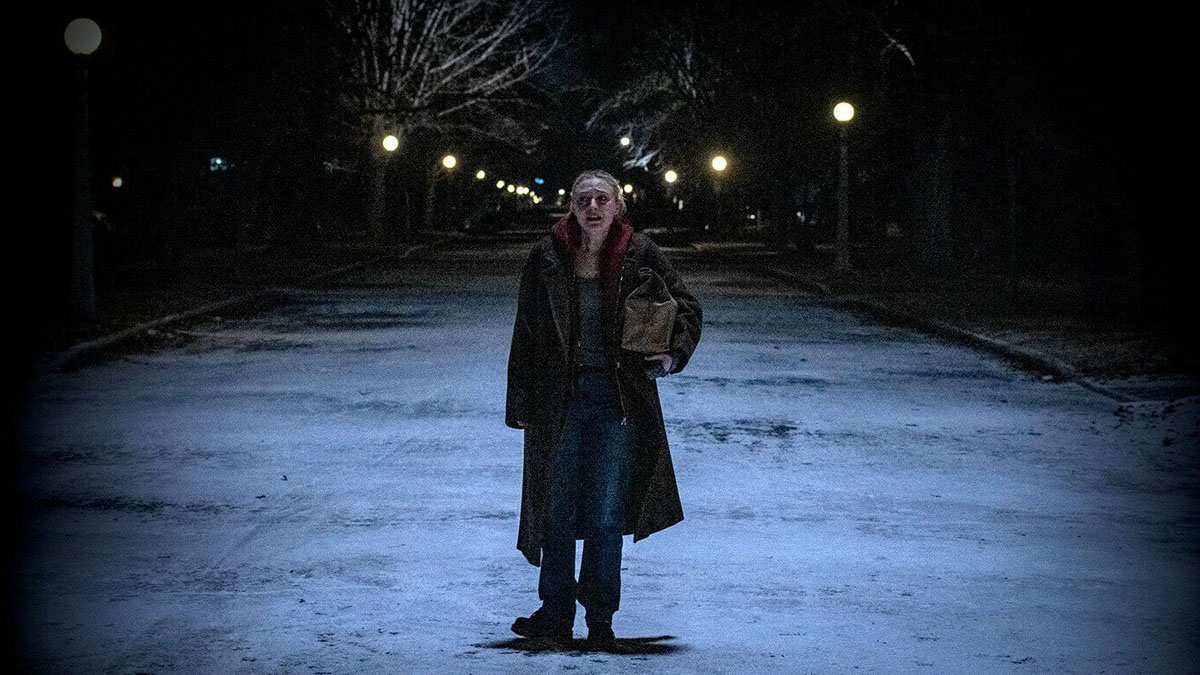
We spoke after the digital release of Vicious, in which Dakota Fanning plays Polly, a woman contending with a diabolical wooden box that’s been brought to her doorstep. It’s the chamberiest of the auteur’s chamber pieces so far—Fanning is the only actor on-screen for extended periods of time—and a distillation of themes Bertino has explored throughout his career, in work as seemingly diverse as the found-footage freakout Mockingbird (2014) to the mother/daughter/creature triad of The Monster (2016) to the rural deviltry of the pandemic-era The Dark and the Wicked (2020).

What is the genesis of Vicious, what stayed the same about it over time, and what changed over the course of making the film?
I mean, that’s an interesting question, man. At the time I wrote it, it was the pandemic, right in those first few months. Part of it was thinking about movies that could be made in an isolated environment. I had the idea of a box. I’m drawn to stories of people tossed into situations or attacked by an evil they don’t fully understand. And I’ve explored that in a lot of different ways.
Once I started to see Polly and understand her, it came together fairly quickly. And then, not to sound pretentious, but I always think about the Godard quote saying a movie’s born when you write it, it dies when you shoot it, and it’s reborn when you edit it. I think that that’s true—the second you start prepping a movie, the second you get on set, it’s changing. The idea that was in your head just grows and shifts in unexpected ways.
And then you get into post, and that is its own thing on a creative level, on a political level. It’s different when it’s an indie movie from when it’s a studio movie. The movie grows and changes, and you’re hoping to pilot the way you want it to go.
One of the things I like about all your movies is that you create this really intimate showcase for actors, from The Strangers to this one. It really feels as if everyone’s working in very close quarters, in close concert with one another. How has it changed from that first film to working with Dakota Fanning in this one?
Truthfully, when I directed The Strangers, I had never really directed actors at all. I knew that the performances I was getting in my first two or three movies were great, but I didn’t know if I was playing a role in that or not. And I was very self-conscious about it. I think around The Dark and the Wicked is when I came to kind of understand that my process was part of helping the actors. And I am a very visual person. I love working with DPs, I love sound, and I really enjoy working with actors.
I only get to do it on set and maybe a little bit of prepping, but I’ve always tried to have openness and intimacy in terms of the process and communication. And I think that allows actors on some level, maybe, to trust me and be willing to go to places that they’ve often never gone before.
You can feel that in the performances, and Fanning has to carry much of Vicious completely on her shoulders. You said you had a little bit of time for prep, but you were mostly working with her as the film was being shot. How did you guys contextualize what she was going to do? And then how did that play out when you were in the room together?
I mean, each actor or actress is different. I try on some level to shape the process in a way that can help them as much as possible. There are certain technical aspects of horror that don’t exist in dramas. You know, you need certain coverage, you need to be able to go back over things, over and over, in order to build pieces. How you try to keep it fresh, I think, is something that you have to figure out with each actor individually.
Dakota was just such a powerhouse and so aware of how to use her talent and her skills. And it was really fascinating to work with someone who is incredibly confident and not arrogant, but knows how to use her eyes, her body. I was kind of blown away by how strong she was. Sometimes my movies can really wear down an actor. And I felt like she was ready for 20 more days. It was like being with a marathon runner.
So it was a very cool process, and it felt very intimate. And it reminded me in some ways of making The Dark and the Wicked, which was a much smaller budget with a much smaller crew, but that same kind of intimacy. Tristan Nyby—who shot both of those movies—Dakota, and I were very much a team.
It’s funny you say that you conceived of Vicious during COVID, because I think of all of your movies as movies that could be made during COVID. It feels like they take place in small spaces in real time. That’s part of what’s so scary about them. Has that been a conscious decision? Have you just found yourself writing for that sort of scale over and over again, kind of naturally?
All my scripts are very intimate, some of them smaller than others. This was the most intimate piece I’ve ever done. For me, fear is just a very intimate thing. And so I keep coming back to that. I like telling stories that really get to explore a person, or three or four characters, and just get into the heart of it. And so, yeah, the movies do tend to be small. But I like to think that by doing that, I get a chance to really explore the world in a very thorough way.
One of the things that both excites me about your movies and also makes me nervous to watch them is that there is this grim compulsion to go to the end, to extreme lengths. It isn’t hitting the usual pleasure centers. There’s an authentic sadness to these movies. I’m wondering if you could talk a little bit about that?
It’s funny—I think you’re probably the first person who’s ever directly asked me that in that way. I mean, I guess there is a sadness to my work, a bleakness. People have said it’s very nihilistic, and I don’t always agree with that, but I understand why someone might jump to that conclusion.
I don’t think it’s nihilistic to say that there are things coming that you can’t control and that you have to accept. It’s sad, but it’s not nihilistic.
I just think we’re so used to seeing stories about people winning—that it’s the hero’s journey. And for me, when I think about what scares me, it’s not because I think I’m going to win; it’s because I’m afraid I’ll lose. And tragedy often defines people in some ways, over the course of their lives: their parents dying, their friend dying, or just a heartbreak of some kind that scars you and then shifts you. And that’s not to say that there aren’t happy things that also shape you, but I feel like movies have those covered.
Your movies are saying this happy ending isn’t there for you; it’s not going to end well for any of us. And it’s funny that you talk about the sort of tragedies that define people, because one of the other things I think distinguishes your work is your allergy to backstory of a particular kind. What do you feel shouldn’t be revealed in the stories you’re telling?
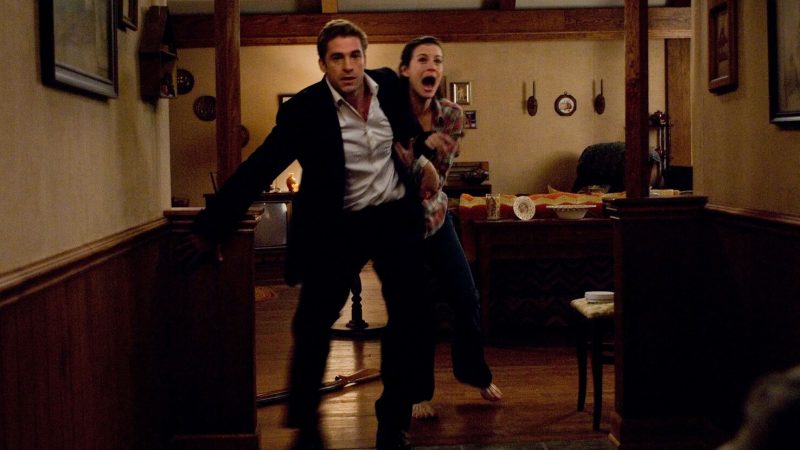
I like to put the audience in the room. We often don’t talk about ourselves. I very rarely tell my life story to somebody. I like to think that character can be built through what you see and what you experience with them. I don’t have a problem with exposition that feels organic. But I often feel like it’s kind of shoved into movies. I’ve kind of avoided that over the course of my career. I don’t know if The Strangers is a stronger movie if you know that Liv Tyler’s character is an accountant, but, again, I recognize that some people really don’t like that about my movies. They want to know these things.
You don’t have to think that the world has a lot of monsters, but what if this one monster lived in this forest? You don’t have to believe everything that’s in the Bible, but what if the Devil was outside of this farmhouse? It’s really about being kind of true to the perspective of the characters. It lets the audience be afraid alongside them. And I don’t know why knowing what people do for a living or what they were like when they were children is something people seem to require sometimes.
It almost feels like studio executive notes have made their way into how the audience responds to movies.
It’s an interesting idea—whether or not it was that audiences needed it or studio notes required it for so long that audiences got used to having it and therefore wanted it. But the movies that I love, that I grew up with—I think about something like Three Days of a Condor, which is one of my all-time favorite movies, and you really don’t get that much out of Robert Redford’s character when it’s said and done. It’s also a really interesting idea because we live in a time where trailers tell people what the movie is, and give away third-act twists.
I think we also live in a time where third acts themselves often avoid the uncanny in order to explain what you’ve just seen in a way that makes people more comfortable than they might be otherwise. And your movies just absolutely refuse to do that.
What do you feel about this phrase elevated horror? Is that still in use at all? I don’t even know what it means. From what I can tell, it means expensive. I wouldn’t do your movies the disservice of describing them that way. I think they’re very close to the ground.
Even when my career started 20 years ago, I would take meetings in Hollywood, and people would basically say, “I don’t like horror.” They would describe certain horror films as being quality, “elevated,” let’s say. And they would describe them as thrillers because they didn’t want to call them horror movies.
So I feel like what has kind of happened, whether it’s trauma horror or elevated horror, is that people have just become more aware that there are different kinds of horror and that it doesn’t all need to be a B movie. Like, I would make the argument that Adam Sandler makes comedies, Wes Anderson in some way makes comedies, Woody Allen makes comedies, but none of those movies feel at all like each other. But they’re all comedies, we accept that. Where I think with horror, it isn’t horror if not designed for a drive-in, or if there aren’t girls taking their tops off…
Was it always horror for you? Was that always the thing you were gonna make?
Oh, I grew up watching a lot of dramas. I still watch a lot of dramas. But then, yeah, my go-to was horror, sci-fi. I wasn’t gonna rent comedies as much. When you sell something in Hollywood, you’re almost immediately kind of put into a box. And you have a choice—do you try to get out of that box as quickly as possible? You know, if I had happened to write a romantic comedy spec that sold, I would have desperately wanted to show that I could do something else because I don’t really feel comfortable within that.
But, in that moment, I felt very solid that I wanted to stay in horror. I didn’t wanna grow out of it. I have no problem with other directors choosing to use horror as a springboard, but I just love the genre. I like what fear does to characters and people. And I think my own life has been shaped by certain fears and certain events. And so, to me, it feels kind of natural.
Without being too autobiographical, are you comfortable talking about an event or two?
I mean, I just had a lot of stuff that I didn’t have a lot of explanations for when I was a kid. I think the reality of it is that we all have these horrible things that happen, you know, a fire, a car crash, or whatever, and we wish that there was an answer. You see these tragic stories now, and it’s like the desperation in the news—who’s to blame? Like, there had to be one person responsible for X, because if we can figure that out, then we know it’s not going to happen to us.
That’s the logic of the conspiracy theory, too, right?
Yeah. Look, I love the genre. I think it allows me as a director to play with all these different tools; sound is crucial, production design, how you choose to use score. The Texas Chain Saw Massacre has almost no score, then you have movies with wall-to-wall score; it’s like, European horror versus American horror versus… there are different ways of doing it—found footage, which, you know, truly kind of blew up. Like, did you need $50 million to make a horror movie? The answer was no.
Can you talk a little bit about the move from The Strangers to Mockingbird, which is a woefully underseen example of that kind of movie? I think it’s very, very scary and alarming. Was it a conscious decision to pivot and do a different kind of experiment—combined with “this is what I can get made right now,” which is always a factor with these things?
Yeah, I appreciate you saying that last part because, you know, there are a handful of writer/directors that when they write something or when they announce, “I want to direct something,” they just get to do it. For the rest of us… I always say it’s like people deserve a trophy just for getting a movie made. The battles, the process, it can be years and years. I think, looking back on it now, I was very scared because The Strangers had kind of exploded. And again, that’s a movie that some people hated. It’s a movie that the studio did not like. I mean, it sat on the shelf for a year before they figured out how to market it.
I read Ebert’s [one-and-a-half-star] review of it yesterday. It was kind of funny because he’s going, it’s good if you’re into this sort of thing. The guy can direct the hell out of it.
I always liked that review because, yeah, that’s an example where he personally just genuinely didn’t like the message of it. And so I respect that. I was very terrified to follow the movie. I certainly had projects that I was trying to put together and they didn’t happen. And this was around when found footage and Insidious came out. And so the horror market changed and budget changed.
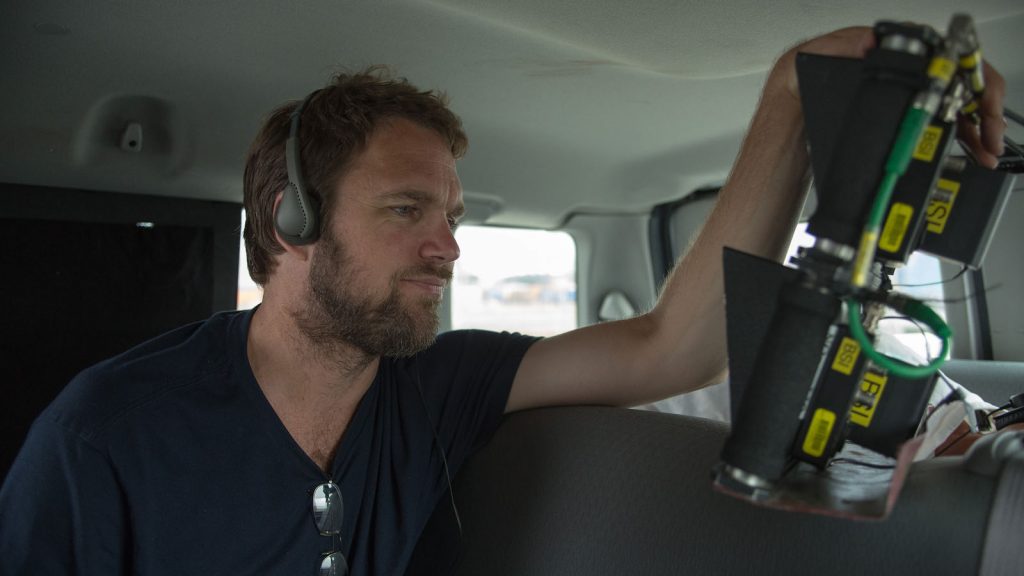
But I love found-footage movies. I think it’s a really cool way to tell a story. And so I got excited about it. You know, [Mockingbird] was a movie in which the actors truly operated [the camera]. There wasn’t a DP pretending to be them. And I learned a lot about sound design through it. I’ve always been really glad I made it, and I think it was also a big moment for me. Because it didn’t hit. Critics didn’t love it. And I still got up the next day.
And then I started creating again, so it was a really important thing for me to learn—that you’re just going to keep creating. And sometimes it’s going to work and sometimes it’s not, but this is who you are, and you’re just going to keep doing it.
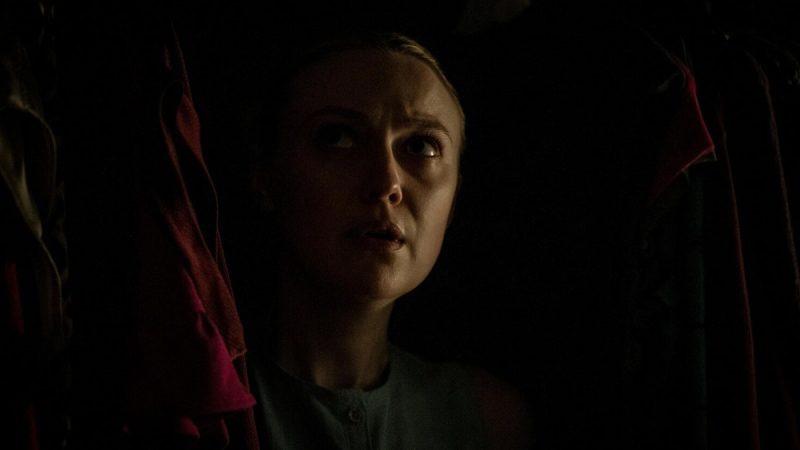
Another thing I want to ask about is the way that Vicious brings together a lot of what is in the previous films. You’ve got a person alone in a house being menaced. You have inexplicable events besieging the person. You have these terrible obligations that people have to perform. But there’s a more collage-like feeling to this movie, as if we’re wading around inside an experience a little bit more than the other ones, and that there are things we don’t know about what we don’t see. It’s like we’re thrust into a subjectivity sort of further than we have been in the other movies, and not just because Polly’s the only person on-screen. Spatially, even, it feels a little more jagged. I’m wondering if that was something by design in the script or something you found in the editing.
I don’t know if I’ve ever been as hyper-focused on wanting everything to be about this character, how it sounds, how it feels… I wanted the camera to invade her space and invade her all the way; it was a conscious effort to do that.
I think it’s not the same as my other movies. It felt like intimacy on steroids on some level. That was something we talked about from the beginning. And I wanted the colors to be brighter. I knew that I wanted the score to feel a certain amount of anxiety.
There was a personal aspect to the film, like there are aspects of Polly that I related to more than with some of my other characters. So in some ways, they bled. When I started planning to direct the movie, I think that’s only when I kind of realized some of the similarities that I had written in without necessarily consciously thinking about it.
Is there stuff that you don’t feel like subjecting people to anymore that you might have when you started your career? Are there certain things, certain kinds of violence, you are more sensitive to and resistant to putting on screen now?
I think I’ve honestly gone the other way.
I thought that’s what you were gonna say, but I was genuinely curious.
Well, I feel like art is being attacked a lot. Look, I don’t set out to make some sort of stand with my movies, that’s not what I’m trying to do. But I believe art should sometimes be hard to look at and should make you angry and should upset you. I think that these are emotions that we should feel.
And so I’m more interested in pushing certain things, but not because I want to purposely be gross or sadistic or anything. I saw an article about French critics responding to a push by the French government to have less smoking in their movies. And this one critic was like, art and cinema should not have morality. And there’s some truth to that. Now that doesn’t mean that I want snuff films or art like, you know, The Birth of the Nation, but I think it isn’t the job of art to follow the code. Artists should push against stuff.
I think one of the reasons people go to horror movies, at least one of the reasons I find myself watching them sort of compulsively, is because there’s a wider berth for this lack of morality that you’re talking about. Like, worse things can happen in these movies than can happen in almost any other kind of movie. And it’s still pretend, but there’s a permission that is liberating, even for somebody who’s watching them through closed fingers.
Like, I believe in bubblegum movies, I do. I love McDonald’s. I’m not afraid to say that. But I don’t eat it every day, and I wouldn’t want to. And I would hate it if that’s what all restaurants were. If I had to complain about where I think film is right now, it’s that there are a lot less choices and a lot less kinds of movies that get exposure.
Finally, I just want to ask, because I talk about this with everybody who cares about movies: how are you feeling about the current state of exhibition?
I wish that my movies were theatrical, more than they have been. I certainly make them hoping for theatrical. It’s weird, though, because some of the most important horror films that I’ve ever seen, I saw at home.
There’s something about the intimacy of your movies in particular that watching them at home potentially makes them scarier.
Look, I saw The Shining for the first time at home. Jacob’s Ladder, one of my all-time favorite movies, I’ve never seen in the theater.
You know, I just want budgets to exist. I want crews to be able to make a living wage. I think that’s what I worry about in terms of the future. The film industry needs less executives and more money for artists. 🩸
is a writer and director based in Brooklyn. He wrote and co-directed the feature Slow Machine, and has written on film for BOMB Magazine, Metrograph Journal, and 4columns.org.
 FRESH BLOOD
“Because you were home.” That’s it. The best home-invasion movie ever made is built on a foundation of senselessness. There are people in your house trying to kill you and you don’t know why.
BY LAURA WYNNE | May 22, 2024
I’ve reached a place of acceptance where I can admit without shame that I watch scary movies...
BY MELISSA LYDE | January 31, 2023
Befitting a story of blue-collar desperation, Session 9 is extremely economical in its telling. From the moment the film starts...
BY VIOLET LUCCA | October 31, 2021
RAVENOUS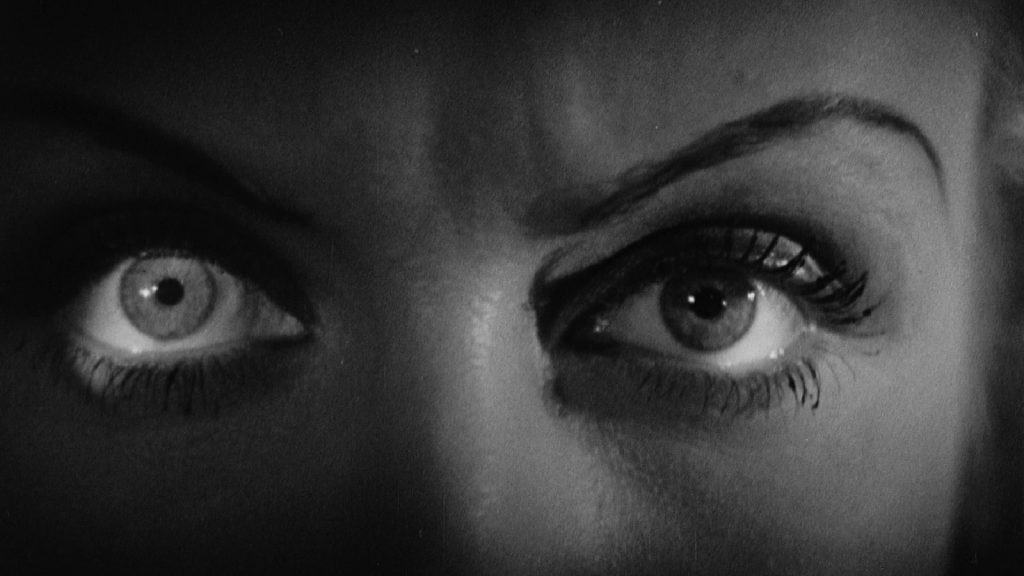
This pre-Code offering packs a lot of story into its typically brisk running time, with several plot threads weaving together a (not always successful) tapestry of spooky and criminal doings.
READ MORE >
BY ANN OLSSON | Month 00, 2021
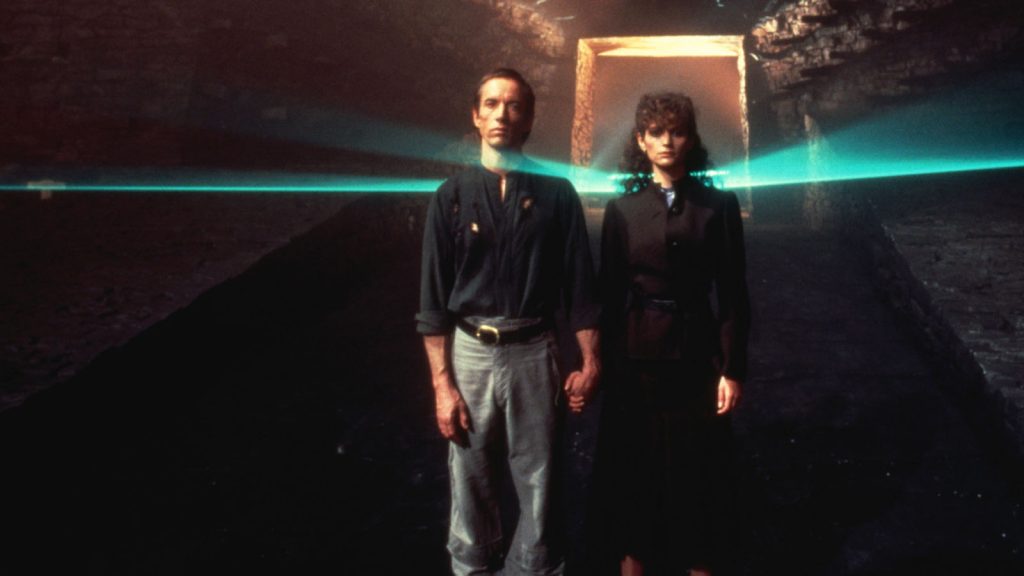
In what could be the fastest-resulting rape revenge movie, a drunken lout brutally forces himself on Ida, the young woman who doesn't return his affections, during a party over Labor Day.
READ MORE >
BY LAURA KERN | Month 00, 2021
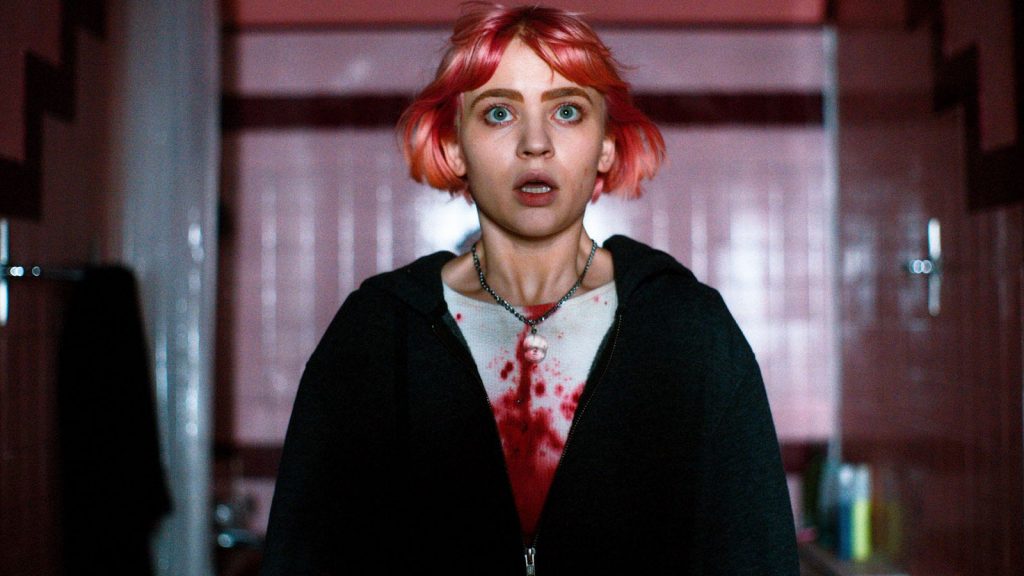
Beast is a lot of movies in one package - fractured fairy tale, belated-coming-of-age story, psychological drama, regional horror film - but above all it's a calling card for its leading lady, Jessie Buckley.
READ MORE >
BY LAURA KERN | Month 00, 2021
 JustWatch