On one level, this is a story of longing and projection, of strange love between opposites. The twosome becomes triangulated when opposition breeds tension and a third party spies an opportunity, only to right itself once one of the opposites is eliminated. The eliminated lover will later come to haunt the new couple, but that’s a whole other movie.
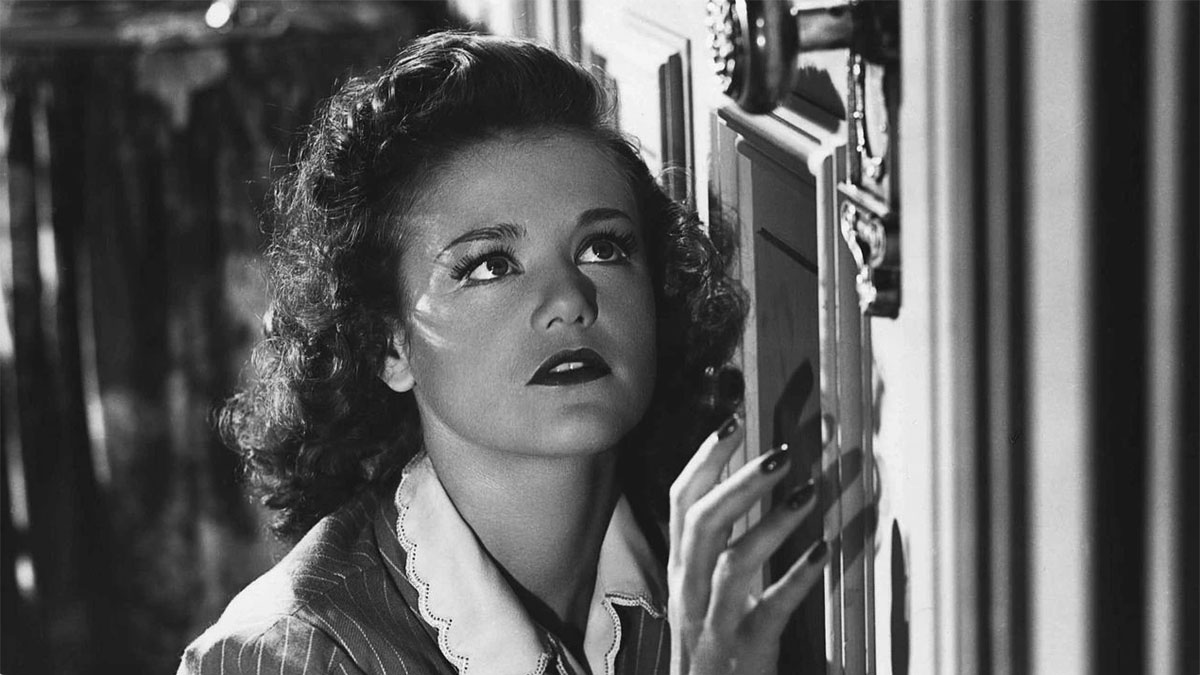
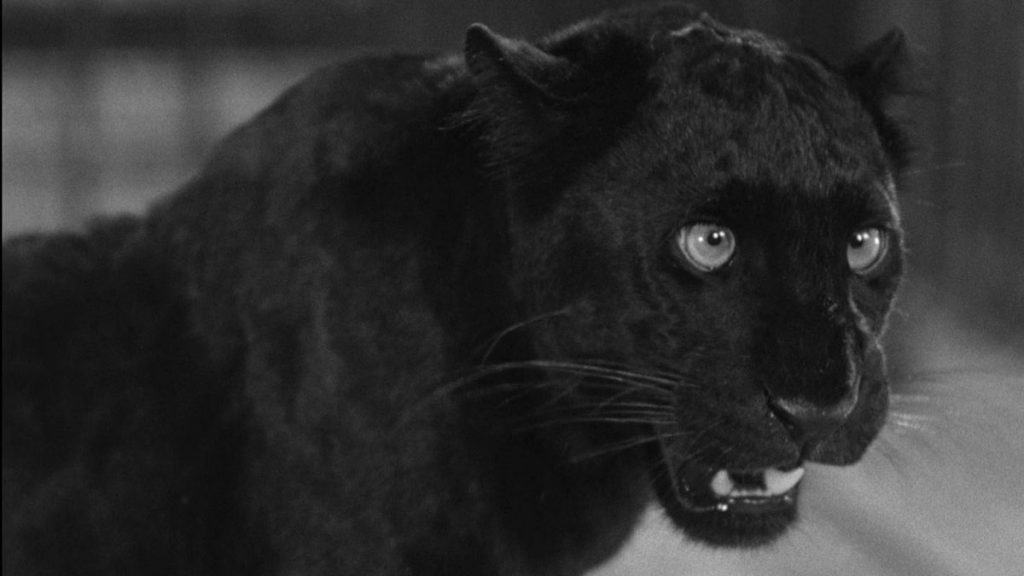
Irena (Simone Simon) is a Serbian living in wartime America, working as a commercial illustrator. She’s mysterious, queerly seductive, lonesome. Oliver (Kent Smith) is a designer for a ship and barge construction firm. He’s boyish, polite, all-American. He claims to have never been unhappy in his life. They meet at the zoo, where she’s sketching a panther. He barely chats her up before he’s already walking her home. She invites him in and they lounge in the penumbra. She tells him she likes the dark. “It’s friendly.” Before Oliver leaves, he and Irena have already breached some threshold. Soon they’ll be married. Soon it will be clear that their marriage will not be consummated. This match is doomed.
Everyone in Cat People (1942) speaks in code about fucking. Contemporary audiences could hardly have missed it. Fucking is the all but explicit subject of Oliver’s conversations with his co-worker Alice (Jane Randolph), who is sexy in an earthier, more accessible way than Irena, and who slyly tries to appear as Irena’s ally, while making it clear that she’s available as both separation negotiator and replacement lover to poor, dumb Oliver, in over his head from the start.
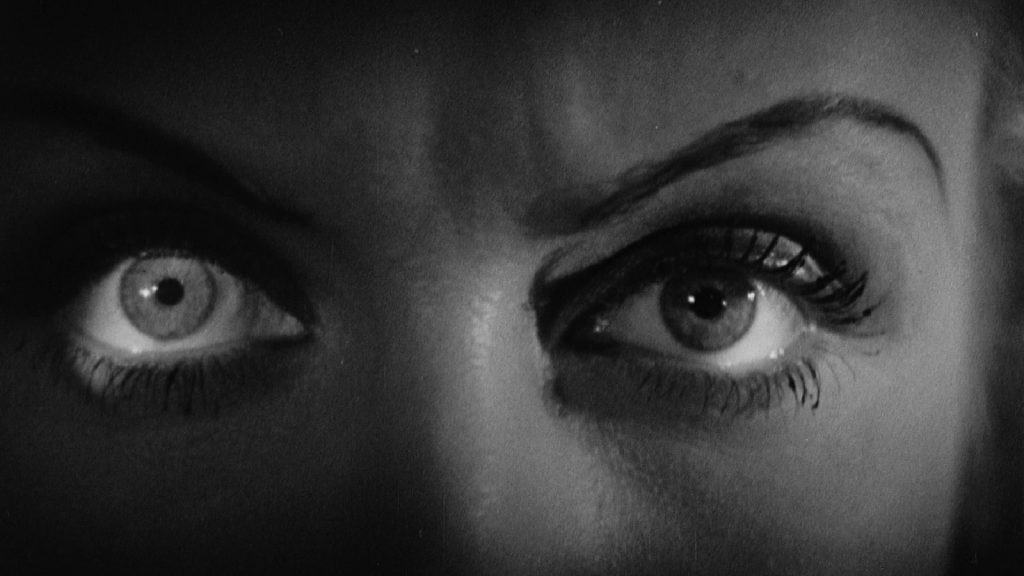
Cat People is also a brilliant modern horror story, the first in a cycle of such marvels Val Lewton produced for RKO throughout the 1940s. Irena is convinced she’s subject to an ancient curse, that some terrible violence within her will be unleashed if she’s aroused by so much as a kiss. She believes that she’ll metamorphose into a creature as merciless and deadly as that panther in the zoo, stalking the perimeter of its cage. Is Irena delusional due to unresolved trauma? Or is she really a shape-shifter? The film, directed by Jacques Tourneur and photographed by Nicholas Musuraca—the same duo who would reunite so memorably on Out of the Past (1947)—written by DeWitt Bodeen, edited by Mark Robson, and meticulously overseen by Lewton, suggests, at best, maybe. Rather than reinforce the supernatural, Cat People enhances the uncanny: think of the gorgeously eerie moment when, on the night of Irena and Oliver’s wedding, as they celebrate in a Serbian bistro, a stranger with a feline aura (the wonderful Elizabeth Russell, another member of Lewton’s stable) approaches their table, locks eyes with Irena and says, in Serbian, “My sister.” Ambiguity or ambivalence are elemental in nearly all of Lewton’s best horror films, aided by miserly budgets that he and his collaborators responded to with aesthetics so spartan and narratives so compressed as to be oneiric poetry.
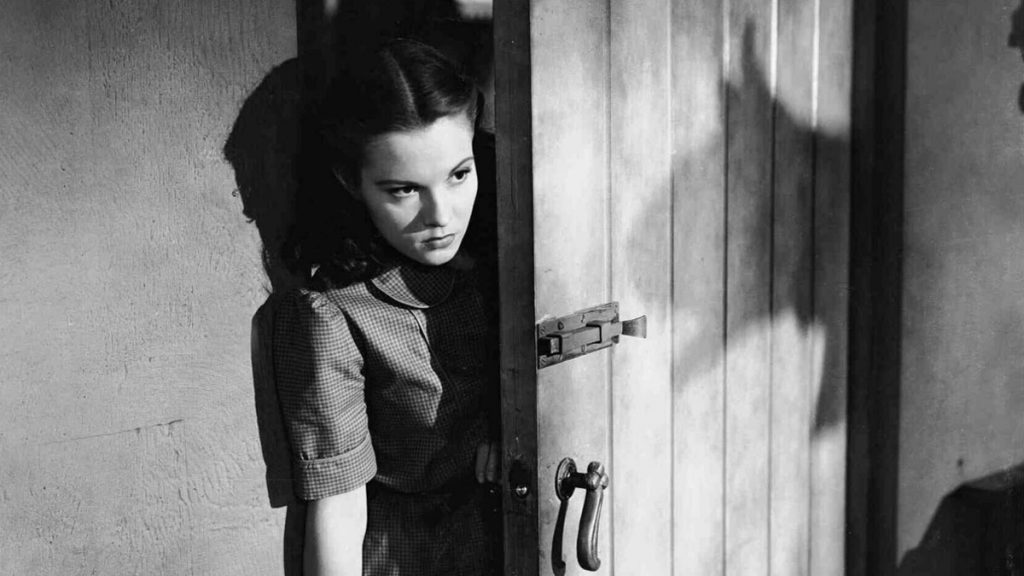
Oliver never forces himself on Irena, but a charismatic, predatory psychiatrist (Tom Conway) does and is slaughtered for it. A similar fate nearly befalls Alice, who, in two of the film’s most exquisite and influential scenes, is pursued by an unseen force, first along an empty nighttime street, and second at an otherwise uninhabited indoor pool, the undulating water reflecting hypnotically on the ceiling. While the film features original music by Roy Webb, it’s notable that both Alice-in-peril sequences are devoid of music, relying instead on soundtracks consisting solely of footsteps, splashes, perhaps something rustling in a nearby bush. If only more films understood the contract between apprehension and quiet.
Lewton was one of those rare figures we can elect to the category of producer auteur. He nurtured every aspect of his films, providing the final revision to every scenario. The films were personal to him and spoke of his own idiosyncrasies: apropos of Cat People, he was frightened of cats and loathed being touched. More generally, Lewton could be somewhat snobbish about genre, but that he found himself working in horror served his métier well. He was drawn to tales of perverse desire, doomed romance, and suicidal impulses—all potent feelings that can arguably be explored more freely in an inauspicious B-chiller like Cat People than in the prestige productions Lewton coveted. (The assignment also proved profitable: Cat People cost roughly $135,000 and made about $4 million domestically.) I’ve watched this film as many times as I’ve watched any, often using it to introduce skeptics to the lyricism of golden-age Gothic cinema. I find its allure inexhaustible. 🩸

 JustWatch
 FRESH BLOOD