
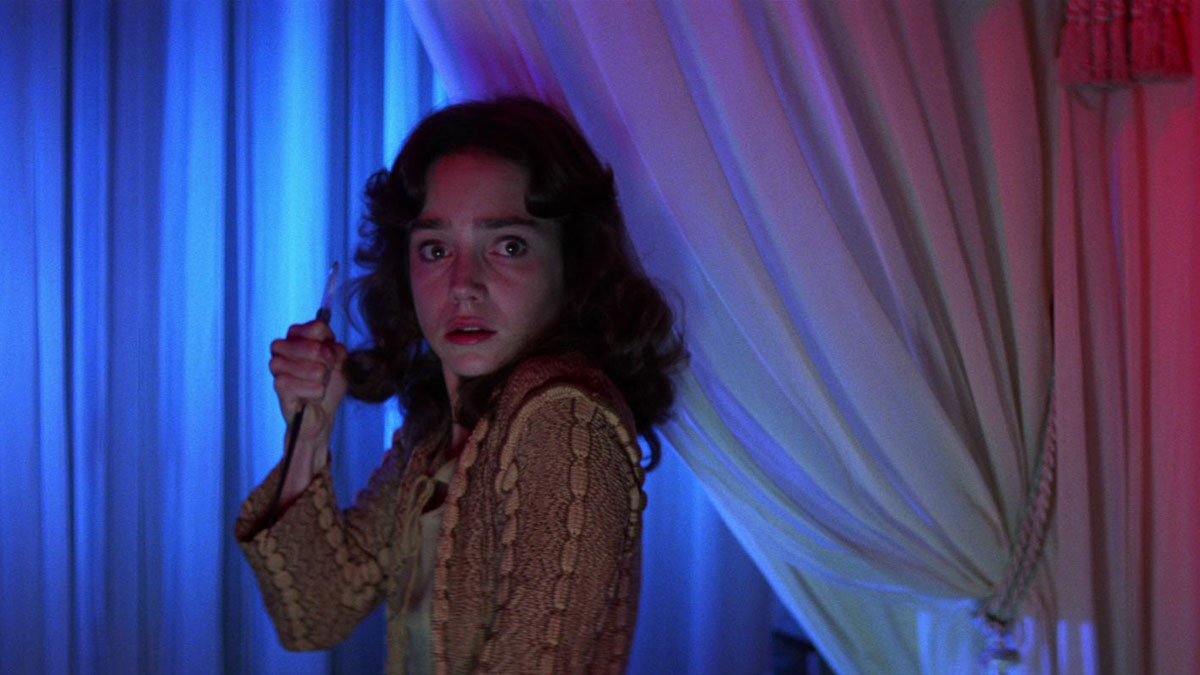

It’s a positively daunting task to come up with anything new and insightful to say about canonical films that have been discussed, analyzed, and adored to death. Because of this, the most beloved titles often get pushed aside for deeper dialogues about others more in need of the spotlight—but we can’t sit back and let that happen; we can’t stop talking about the likes of Suspiria. If his later output is any indication, it’ll forever remain Dario Argento’s finest moment. Precious little in the world can be deemed inarguable, but I’d say this statement comes pretty close. I may have seen Argento’s wonderful Creepers, aka Phenomena (1985), earlier and more often, and the greatness of Deep Red (1975) cannot be ignored—it is, after all, Argento’s personal pick of his litter—but it’s Suspiria that will always be named in the first breath when I’m asked the agonizing question of what my favorite horror movies are.
I was in awe from the first moments my eyes caught sight of it, from the arresting typography of the opening credits and knockout locations and colors—its psychedelic palette inspired by Snow White and the Seven Dwarfs (1937)—to its gloriously styled murder set pieces and unsettling mood. And I was terrified of Goblin’s aggressively brilliant score, so much so that I had to mute the sound at times. (I of course later bought the soundtrack and listened to it over and over.) The film is at once giallo-ish, slasher-like, and supernatural; Art Deco and Art Nouveau by design; and heavily influenced by German Expressionism. It features out-of-this-world set decoration, with its now-famous stained glass, bold wallpaper prints, and peacock-feather lamp, and stunning cinematography (by Luciano Tovoli), offering perpetual gliding camerawork and breathtaking overhead shots. In other words, it’s dazzling in every frame.
But while I point out that there’s not much more to add to the Suspiria conversation, the reality is that in an alarming number of instances when I did throw out this title as one of my all-timers, I was greeted with blank stares by actual film nerds, or by younger generations thinking I was referencing Luca Guadagnino’s endless, dull remake from 2018, and that is a travesty. No disrespect to Dakota Johnson, but it’s impossible to compete with Jessica Harper in the role of young dancer Suzy Bannion, who arrives late one rainy night to a prestigious German ballet academy, where nothing feels normal, girls are disappearing, and it begins to seem as if the staff are all up to something sinister.
Gorgeous Harper is soft-spoken, at times even monotonous (the Johnson recasting does make sense in this regard); she’s the perfect innocent in a chaos-ridden story. And as written by Argento and Daria Nicolodi, in the former’s only credited screenplay collaboration with his regular leading lady and life partner at the time, it’s all kind of nonsensical, far from subtle, but wholly mesmerizing; its seeming imperfections are somehow what make the film so absolutely perfect. The usually distracting dubbing of the non-English-speaking actors and some stilted dialogue and performances only add to Suzy’s sense of displacement. And those who spent as much time as I did with Maitland McDonagh’s invaluable Argento companion, Broken Mirrors/Broken Minds: The Dark Dreams of Dario Argento, will feel extra delight in Udo Kier, as the psychiatrist Suzy turns to for help, uttering the famous line that inspired the book’s title: “Bad luck isn’t brought by broken mirrors, but by broken minds.”
It almost doesn’t matter that Suspiria is ultimately a witch movie, the first in Argento’s “Three Mothers” trilogy, followed by Inferno (1980) and Mother of Tears (2007). Or that it’s hard to imagine a nasty coven successfully running a school, based on the speed at which its students die upon suspecting that black queen Helena Markos is living upstairs. But it sure is fun to have two of the featured witches played by classic-cinema stars Joan Bennett and Alida Valli. You can listen to Bennett incanting “death, death, deaaaath” to Suzy all day. This is a film that never loses its luster; in fact, it looks only more brilliant on every viewing, from its mysterious, stormy beginning to its fiery, delirious end.
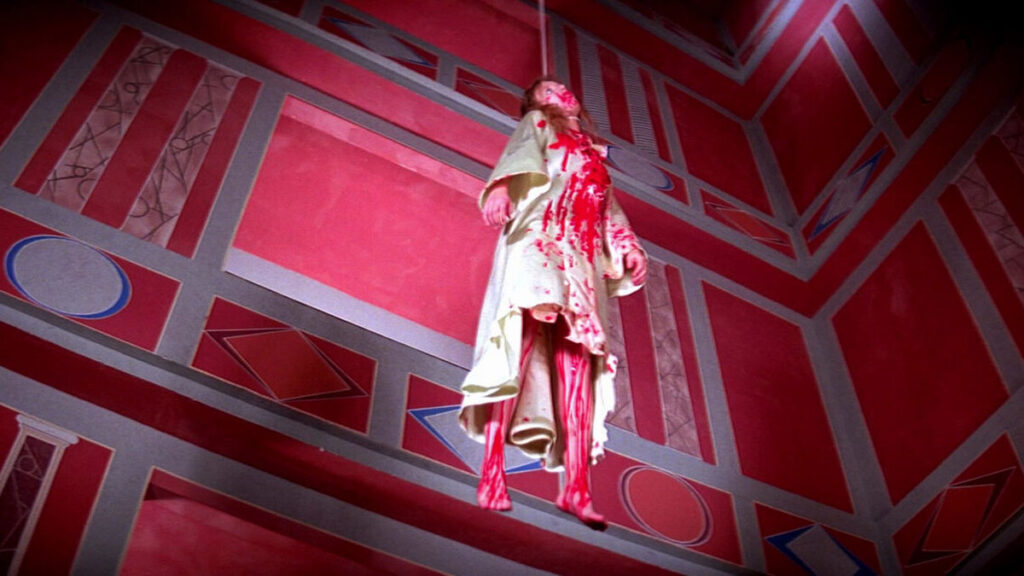
 FRESH BLOOD

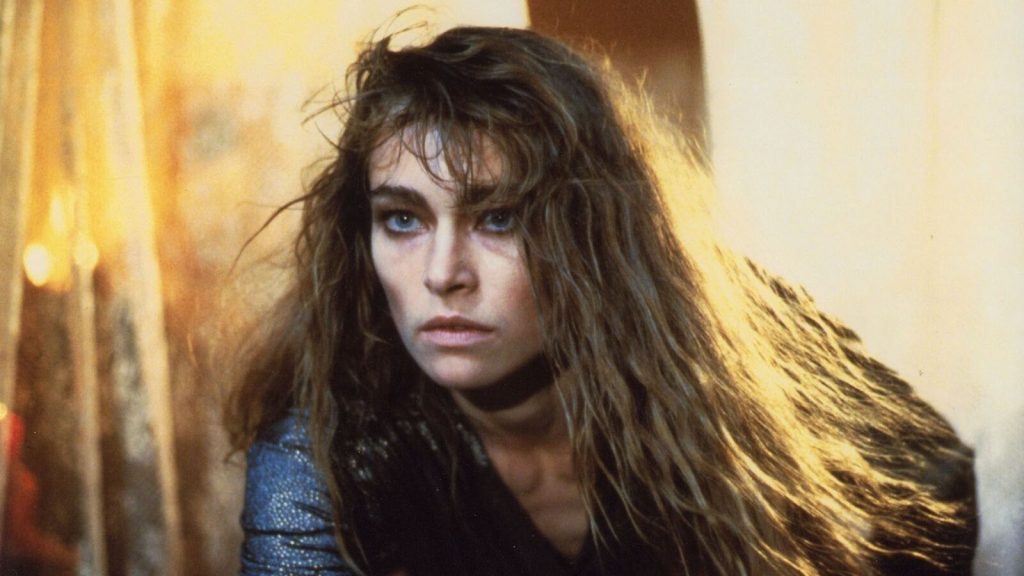
 RAVENOUS
 JustWatch